
education
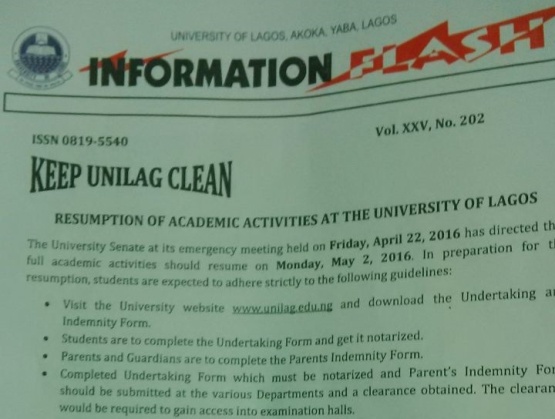
UNILAG set to resume Academic Activities on May 2nd


education
Nigerian Government’s Student Loan Initiative: 30,000 Successful Applicants and Upcoming Second Phase


Student Loan: Nigerian Government Record 30,000 successful applicants
The Nigerian government has embarked on a transformative journey to empower its youth through education by providing student loans. This initiative aims to support students financially, enabling them to pursue higher education without the burden of immediate tuition fees. As the first phase concludes with 30,000 successful applicants, the government is poised to commence the second phase of this groundbreaking program.
Overview of the Student Loan Program
Objectives and Vision
The primary objective of the student loan program is to enhance access to quality education for all Nigerian students. This initiative aligns with the government’s broader vision of fostering a knowledgeable and skilled workforce, capable of driving the nation’s socio-economic development.
Application Process and Eligibility
To ensure a transparent and fair selection process, the government has established clear eligibility criteria. Applicants must be Nigerian citizens, enrolled in accredited tertiary institutions, and demonstrate financial need. The application process involves submitting necessary documents and undergoing a rigorous review to verify the authenticity of the information provided.
First Phase Success: 30,000 Beneficiaries
Impact on Students
The first phase of the student loan program has witnessed overwhelming success, with 30,000 students benefiting from the initiative. These loans have alleviated the financial stress on students and their families, allowing them to focus on their academic pursuits. Beneficiaries have reported improved academic performance and increased motivation to complete their education.
Feedback and Testimonials
Numerous testimonials from beneficiaries highlight the positive impact of the student loan program. Many students have expressed gratitude for the financial support, which has enabled them to continue their education without interruptions. This feedback underscores the program’s effectiveness and its role in transforming the educational landscape in Nigeria.
Second Phase: What to Expect
Commencement Date and Application Guidelines
The government has announced that the second phase of the student loan program will commence on 25th June 2024. Detailed guidelines for the application process will be made available on the official government portal and through various communication channels. Prospective applicants are advised to prepare the necessary documents and stay informed about the application deadlines.
Expanded Eligibility Criteria
In response to feedback from the first phase, the government plans to expand the eligibility criteria for the second phase. This expansion aims to include a broader spectrum of students, particularly those from underrepresented regions and disadvantaged backgrounds. The goal is to ensure equitable access to education for all Nigerian students.
Anticipated Challenges and Solutions
While the first phase was successful, the government anticipates potential challenges in the second phase, including an increased number of applicants and the need for efficient processing of applications. To address these challenges, the government is investing in advanced technology and increasing the capacity of the review team to ensure a seamless application process.
Future Prospects and Long-term Impact
Strengthening the Education Sector
The student loan program is a critical component of the government’s strategy to strengthen the education sector. By providing financial support to students, the government aims to increase enrollment rates in tertiary institutions and improve the overall quality of education. This initiative is expected to produce a highly skilled workforce that can contribute to the nation’s development.
Economic and Social Benefits
In the long term, the student loan program is poised to yield significant economic and social benefits. Graduates who benefit from the program are likely to secure better employment opportunities, leading to higher incomes and improved living standards. Additionally, an educated population can drive innovation, entrepreneurship, and economic growth, thereby enhancing the nation’s competitiveness on a global scale.
Conclusion
The Nigerian government’s student loan program marks a significant step towards achieving educational equity and empowerment. With 30,000 successful applicants in the first phase and preparations underway for the second phase, the program is set to transform the lives of countless students. By investing in education, the government is laying the foundation for a prosperous and sustainable future for Nigeria.

The House of Representatives has urged for a ceasefire between the Academic Staff Union (ASUU) and the University of Abuja’s management amidst the ongoing strike.
Representative Abubakar Fulata, Chair of the House Committee on University Education, made this plea during a meeting with the University’s Vice-Chancellor, Prof. Abdul-Rasheed Na’Allah, and ASUU representatives at the National Assembly in Abuja.
Fulata emphasized the necessity of maintaining uninterrupted academic operations, prompting the government to exclude universities from the Integrated Personnel and Payroll Information System (IPPIS).
“We pledged to uphold academic continuity in Nigerian universities. Recognizing the challenges posed by IPPIS on university administrations, we advocated for change,” he stated.
Fulata urged ASUU to halt the indefinite strike initiated on May 2, citing ongoing efforts to resolve the conflict and forthcoming legislative measures to address governance issues within universities.
The National Assembly plans to introduce a bill addressing concerns regarding Vice-Chancellor appointments and university governance in the absence of a council.
He urged ASUU to consider suspending the strike as discussions continue towards a comprehensive resolution.

The Abuja chapter of the Academic Staff Union of Universities (ASUU) has initiated an indefinite strike to highlight issues concerning the union.
ASUU’s Abuja chapter declared its intention to commence the strike following its congress on Thursday, which took place at the Permanent Site of the institution.
Sylvanus Ugoh, the Chairman of ASUU at UniAbuja, informed Leadership that the union had decided to begin a complete and indefinite strike effective immediately.
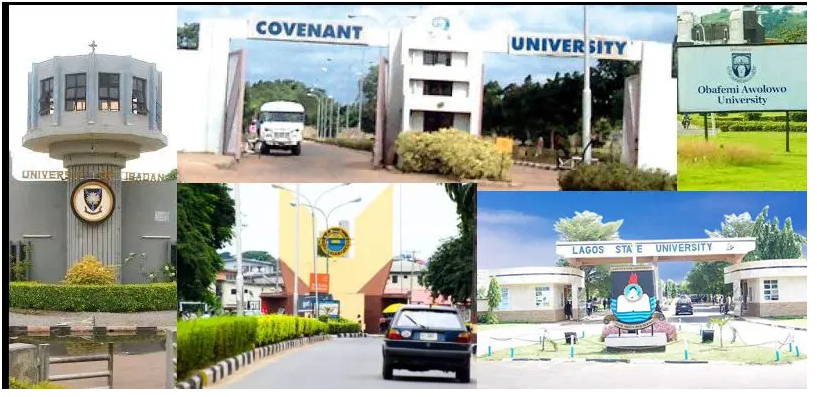
If we have to talk about the top 10 universities in Nigeria, you all will believe that tertiary education holds significant importance within Nigeria’s educational framework, providing advanced learning opportunities beyond secondary schooling. This sector encompasses universities, polytechnics, colleges of education, and specialized institutions, playing a crucial role in developing the country’s human capital, fostering innovation, and driving socioeconomic progress.
Nigeria boasts a diverse range of tertiary institutions, from public universities to private colleges, each offering unique strengths and focuses. Public universities, funded by the government, often cater to larger student populations and offer a wide array of academic programs. Conversely, private universities provide alternative options, such as specialized education and smaller class sizes.
However, challenges persist within Nigeria’s tertiary education sector, including insufficient funding, infrastructure deficiencies, and quality assurance issues. These challenges can impede the sector’s ability to meet the demands of a growing population and evolving job market.
SteadyGist utilized the Times Higher Education (THE) Rankings for 2024 to rank the top universities in Nigeria. THE World University Rankings are renowned global benchmarks that evaluate research-intensive universities across key areas like teaching quality, research environment, knowledge transfer, and international outlook.
The top 10 universities in Nigeria for 2024 according to SteadyGist:
- Covenant University
Ranked as the top university in Nigeria, Covenant University accommodates 8,940 students, maintaining a gender ratio of 37:63. Interdisciplinary science research constitutes 37% of its academic endeavours, with a student-to-staff ratio of 17.5
- University of Ibadan
The University of Ibadan boasts a student body of 41,269 students, evenly split between genders. Each staff member caters to 19.7 students, and interdisciplinary science research makes up 19% of its academic portfolio.
- Federal University of Technology, Akure
With over 19,711 students, the Federal University of Technology, Akure, maintains a gender distribution of 26% female and 74% male students. Interdisciplinary science research constitutes 35% of its academic pursuits, with a student-to-staff ratio of 24.5.
- University of Lagos
The University of Lagos, a public research institution, has a student body of 41,048 students, with a gender ratio of 51% female and 49% male. Each staff member serves 27.5 students, and interdisciplinary science research accounts for 25% of its academic activities.
- Bayero University
Located in Kano state, Bayero University accommodates over 43,027 students, with a gender distribution of 35% female and 65% male. The institution does not have foreign students, and 27% of its academic endeavours involve interdisciplinary science research.
- University of Ilorin
With a student body of 52,921, the University of Ilorin maintains a gender balance of 51% female and 49% male students. Its interdisciplinary science research efforts amount to 28%, while the student-to-staff ratio stands at 39.2.
- University of Nigeria Nsukka
The University of Nigeria, Nsukka, caters to about 43,108 students, with a gender distribution of 46% female and 54% male. Each staff member attends to 11.7 students, and 1% of the student body comprises foreigners. Interdisciplinary science research contributes to 25% of its academic portfolio.
- Afe Babalola University
Afe Babalola University enrols approximately 9,660 students, ensuring a close-knit learning environment with a student-to-faculty ratio of 10.7. The institution accommodates a 1% foreign student body, with a female-to-male ratio of 57:43. Interdisciplinary science research constitutes 30% of its academic pursuits.
- University of Benin
The University of Benin hosts over 47,837 students, with a student-to-staff ratio of 25.8, while the female to male students’ gender ratio stands at 49:51. Interdisciplinary science research contributes to 25% of its academic output.
- Federal University of Agriculture, Abeokuta
The Federal University of Agriculture, Abeokuta accommodates 17,433 students, maintaining a student-to-staff ratio of 26:5. It has a gender ratio of 52:48, with a 0% foreign student population. Interdisciplinary science research constitutes 30% of its academic endeavours.



Nigerian govt gives update on national grid collapse

BREAKING: President Tinubu scraps two ministries, merges others

MTN offices besieged as aggrieved subscribers protest over sim blockage
-
Gov. Ambode11 years ago
Lagos commences prosecution of 28 tax defaulters
-
Fashion9 years ago
These ’90s fashion trends are making a comeback in 2017
-
Entertainment9 years ago
The final 6 ‘Game of Thrones’ episodes might feel like a full season
-

 Entertainment3 years ago
Portable boasts of owning 30 Mansion Across Lagos and Ogun State
-
Fashion9 years ago
According to Dior Couture, this taboo fashion accessory is back
-
Entertainment9 years ago
The old and New Edition cast comes together to perform
-
Sports9 years ago
Phillies’ Aaron Altherr makes mind-boggling barehanded play
-
Ankara5 years ago
50 Best Lace Blouse Styles for Tying Wrappers for 2022