
News
Tinubu Orders Release of 78 Suspects Arrested Over Abuja Convoy Attack


President Bola Tinubu has ordered the release of 78 suspects arrested in connection with an attack on his motorcade in Abuja, following the extension of presidential clemency to those involved in the incident.
SteadyGist reports that the president’s convoy was attacked by some Muslim youths shortly after Jumu’ah prayers at a mosque in the Garki area of the Federal Capital Territory (FCT) on Friday, November 13.
Following the incident, a joint security team led by the police reportedly moved in and arrested 78 suspects.
The development was confirmed in a statement released on Monday by the FCT Police Command’s Public Relations Officer, CSP Josephine Adeh.
According to the police spokesperson, the Presidency subsequently directed that the arrested individuals be cautioned and released after President Tinubu extended clemency to those involved in the attack.
Adeh explained that the police command had begun the necessary procedures to implement the presidential directive.
“In compliance with the directive, the Command wishes to inform the public that the suspects are currently undergoing the necessary release processes,” the statement said.
Meanwhile, the FCT Commissioner of Police, CP Ahmed Mohammed Sanusi, has warned residents against engaging in violence, public disturbances or the destruction of property.
The police commissioner also urged political parties, their supporters and other political actors to maintain peace as preparations for the 2027 general elections gather momentum.
“As preparations for the 2027 general elections intensify, the Command urges all political parties, political actors and their supporters to embrace peaceful political engagement and shun violence, intimidation, inflammatory statements and incitement,” the statement added.
The police command reiterated its commitment to maintaining law and order across the FCT and called on residents to conduct themselves peacefully.

The National Association of Nigerian Students (NANS) has criticised the National Drug Law Enforcement Agency (NDLEA) over its reported N10,000 drug testing fee, accusing the agency of placing an additional financial burden on already struggling students.
The student association has called on the NDLEA Chairman, Brig. Gen. Mohamed Buba Marwa (retd.), to immediately suspend the collection of the fee, insisting that students should not be made to pay for drug testing programmes initiated by a government agency.
NANS made its position known in a statement issued on Monday, November 16, 2026, and signed by its president, Akinteye Babatunde Afeez.
While acknowledging the importance of drug testing and efforts to promote drug-free educational institutions, the association said it would not support any policy that requires students to bear the financial cost of such initiatives.
According to NANS, many Nigerian students are already struggling with rising tuition fees and the increasing cost of living. It warned that introducing an additional N10,000 charge would further worsen their financial challenges.
“The welfare of Nigerian students must not become a revenue-generating venture for government agencies,” the association declared.
The student body maintained that the NDLEA should take responsibility for funding its official activities instead of shifting the financial burden to students.
It also urged Marwa to immediately stop the enforcement of the payment and ensure that students are not compelled to pay the proposed drug testing fee.
NANS further warned that it would not remain silent if students continued to face what it described as unnecessary financial exploitation.
The association’s position adds to the growing concerns over the financial challenges facing Nigerian students and the cost of policies introduced by government agencies within the country’s education sector.

The Presidency has reportedly deleted a photograph showing a massive crowd at the All Progressives Congress (APC) presidential campaign rally in Jos, Plateau State, following accusations from Nigerians that the image was artificially generated.
The photograph, which was shared on social media to portray a large turnout at the campaign rally, sparked controversy after several Nigerians questioned its authenticity.
Dada Olusegun, a media aide to President Bola Tinubu, had reportedly shared the image on his X account on Sunday, a day after the president’s campaign rally in Jos.
He accompanied the photograph with the caption, “Plateau State for PBAT,” giving the impression that the campaign venue was filled with enthusiastic supporters.
However, the post quickly attracted criticism, with social media users accusing the presidential aide of using an AI-generated image to exaggerate the number of people who attended the rally.
Some Nigerians argued that the photograph did not accurately reflect the actual turnout at the event, while others questioned why the Presidency would need to use an allegedly manipulated image to promote the president’s campaign.
Following the backlash, the photograph was reportedly taken down from the social media platform.
Nigerians React to Alleged AI-Generated Campaign Photo
The development has generated several reactions on social media, with many users expressing disappointment over the controversy.
Below are some of the reactions compiled by SteadyGist.
@HAHayat wrote:
“Using an AI-generated picture, especially by a presidential media aide to show the love for the president, is a sign of dwindling fortune.”
Similarly, @Gent2smile criticised the alleged use of artificial intelligence to promote the APC campaign, writing:
“Seyi Tinubu’s City Boy built AI to spread propaganda about the APC’s achievements. INEC deployed AI voters to rig elections. Now, even the Presidency is using AI pictures to lie about a failed campaign. Na wa o! Everyone is standing on a mandate of forgery and propaganda.”
The controversy has once again drawn attention to the growing role of artificial intelligence in political communication, particularly the concerns surrounding the use of digitally manipulated images to influence public perception.
As AI-generated content becomes increasingly difficult to distinguish from genuine photographs, the incident highlights the importance of transparency and responsible communication, especially from government officials and political figures.
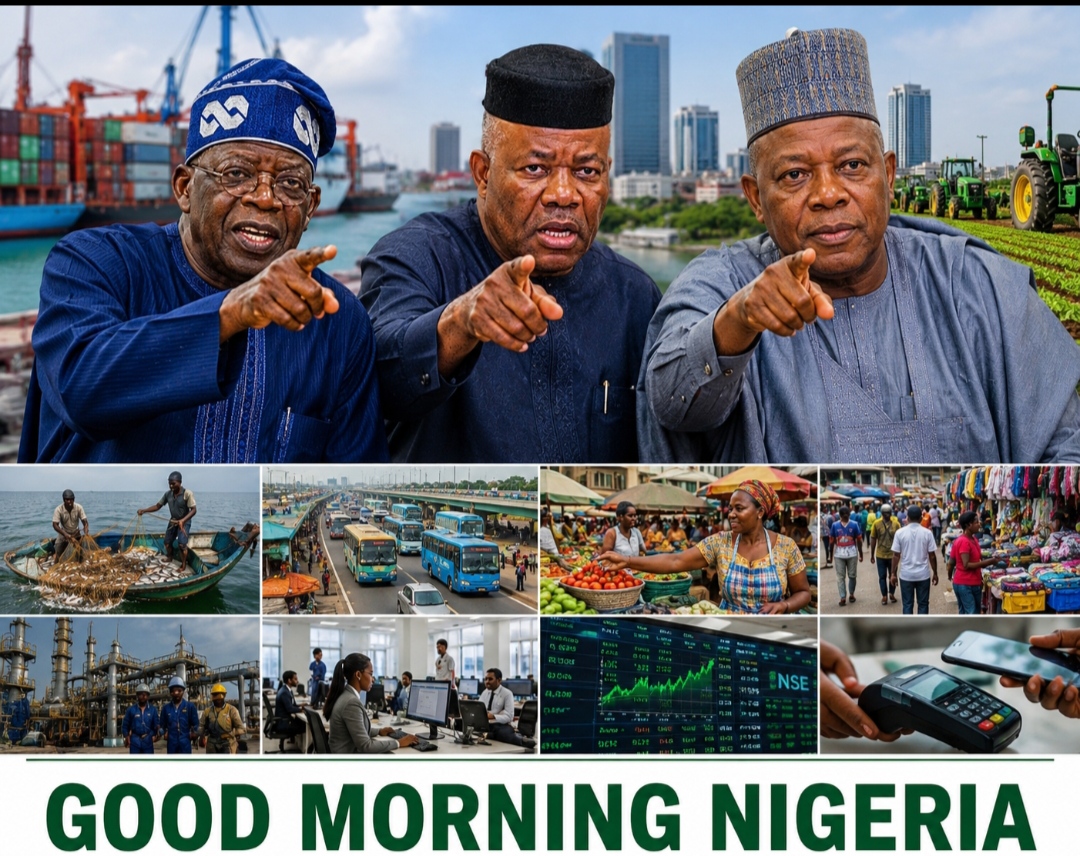
Good morning. Welcome to the latest SteadyGist.com Nigerian newspapers roundup.
Today’s edition of Nigerian news today examines major developments in the 2027 election preparations, proposed state police reforms, political violence, security operations, press freedom, government spending, non-oil exports, electricity supply and business regulation.
The 10 stories below were selected from current reports published on November 15 and 16, alongside official agency statements.
1. State Police Bill moves closer to Tinubu’s desk after approval by at least 32 states
Nigeria’s proposed state police system has moved closer to implementation after the Senate Leader, Opeyemi Bamidele, announced that at least 32 State Houses of Assembly had approved the constitutional amendment. The National Assembly is preparing to forward the harmonised bill to President Bola Tinubu for assent, with parliamentary sources cited by The Punch suggesting that transmission could happen by Friday. Four states were still expected to submit their reports by November 17. The proposal would establish state police services alongside the Federal Police Service, fundamentally changing Nigeria’s centralised policing structure. However, it is not yet law.
2. Kwankwaso’s campaign convoy allegedly attacked in Kano as state government disputes the incident
The National Democratic Congress has alleged that suspected political attackers disrupted Senator Rabiu Musa Kwankwaso’s campaign activities in Bichi Local Government Area of Kano State on Sunday. Ibrahim Garba Shu’aibu, spokesperson for the party’s Kano governorship candidate, Aminu Abdussalam Gwarzo, claimed that armed youths attacked the convoy, injured some campaign team members and damaged approximately seven vehicles. However, Kano State Commissioner for Information Sanusi Bature Dawakin Tofa dismissed the account as political blackmail, demanding evidence of the alleged attack. The police had not issued an official statement confirming the incident at the time of reporting.
3. Anambra communal violence leaves 2,000 displaced as NEMA reports 150 destroyed houses.
The humanitarian consequences of the communal conflict between Umuoba Anam and Aguleri communities in Anambra East Local Government Area have become clearer following an assessment by the National Emergency Management Agency. NEMA reported that approximately 150 houses were destroyed, while about 2,000 residents were displaced. At least 10 people were either killed or remained missing during the violence, which occurred in October. Shops, factories, vehicles and a traditional ruler’s palace were also reportedly destroyed. The agency said its findings would be submitted to the Federal Government to determine possible relief assistance, while the state government has established a committee to investigate the crisis.
4. Zamfara police rescue 19 women and children after 22 days in bandits’ captivity
The Zamfara State Police Command says it has rescued 19 kidnapped people, comprising women and children, after they spent 22 days in captivity. According to the police statement, the victims were abducted from Tungar Haki village in Gusau Local Government Area and taken to a suspected bandits’ camp near Kungurmi village. The rescue operation took place on November 14 following intelligence about their location. Police, Department of State Services personnel and local hunters participated in the operation. The command said all 19 victims were found unharmed and reunited with their families. The development is a positive outcome amid persistent kidnapping threats in the state.
5. Editors demand Daniel Ojukwu’s release, warn that prosecution could undermine press freedom
The Nigerian Guild of Editors has called for the release of investigative journalist Daniel Ojukwu, who is being held at the Kuje Correctional Centre in Abuja. Ojukwu and Foundation for Investigative Journalism founder Fisayo Soyombo are facing a 12-count charge involving alleged cyberstalking and criminal defamation. The case concerns reports questioning more than ₦147 million reportedly paid to an Abuja-based restaurant for school construction projects in Lagos. Ojukwu has pleaded not guilty, and his bail application has been adjourned until December 1. The Guild argues that the prosecution raises serious concerns about journalists investigating public expenditure. The allegations in the underlying reports remain matters for investigation.
6. NDC challenges Tinubu administration over alleged campaign spending and weak budget implementation
The National Democratic Congress has asked President Bola Tinubu’s administration to explain what it describes as an imbalance between political publicity spending and funding for essential public services. The opposition party alleged that only about seven per cent of the Defence Capital Budget was released in 2025, while just ₦36 million of the ₦218 billion allocated to health capital expenditure was reportedly released. It also questioned the financing of the 2024, 2025 and 2026 budgets. These figures and accusations were presented by the NDC and have not been independently established by the reports. The Presidency and APC had not responded when The Guardian published its account.
7. Nigeria’s non-oil exports hit $6.1bn as government prepares digital export processing system
Nigeria generated $6.1 billion in non-oil export earnings in 2025, representing an 11.5 per cent increase from the $5.46 billion recorded in 2024, according to the Nigerian Export Promotion Council. Export volumes also increased by 10 per cent to 8.02 million metric tonnes, covering 281 products sold to 120 countries. To support further growth, the Federal Government plans to introduce the second phase of the National Single Window on December 14. The digital platform will allow exporters to process permits and regulatory approvals through a more coordinated system. Its first stage will cover export permits, while additional agencies are expected to join in 2027.
8. NAFDAC offers eligible small businesses 50% discount on product registration fees
The National Agency for Food and Drug Administration and Control has introduced incentives intended to make regulatory compliance less expensive for small Nigerian manufacturers. Under the programme announced by Director-General Mojisola Adeyeye, businesses employing five or fewer people can receive a 50 per cent reduction in product registration fees. Other measures include electronic applications, a dedicated small-business support desk, faster laboratory analysis and decentralised registration services. NAFDAC also plans to assist eligible manufacturers with export certification and guidance on international quality standards. The incentives are intended to encourage more small producers to formalise their operations while maintaining product safety and regulatory standards.
9. Lekki residents threaten monthly protests over prolonged electricity outages
Residents of the Lekki Conservation Estates Community Development Area have threatened to stage monthly demonstrations if electricity supply along Orchid Road does not improve. The protesters accused Eko Electricity Distribution Company and the Transmission Company of Nigeria of failing to provide reliable service despite residents continuing to pay their bills. Community representatives said the area had experienced more than four months of serious outages and claimed that cumulative supply during October was less than two hours. They said businesses had suffered losses and estates were spending heavily on diesel generators. Eko DisCo had not provided a response to The Punch’s questions when its report was filed.
10. NDLEA arrests American basketball player over 33.95kg cannabis shipment at Lagos airport
The National Drug Law Enforcement Agency says it has arrested a 28-year-old American professional basketball player at the Murtala Muhammed International Airport in Lagos over an alleged cannabis importation operation. The agency identified the suspect as Greene Da’monte Khiree and said 33.95 kilogrammes of Loud, a potent cannabis strain, were recovered from two checked-in bags allegedly abandoned at the airport. In a separate interception, operatives seized 25.05 kilogrammes of methamphetamine concealed in imported breakfast cereal packs from South Africa. These are reported arrests and seizures; the suspects have not been convicted by a court.
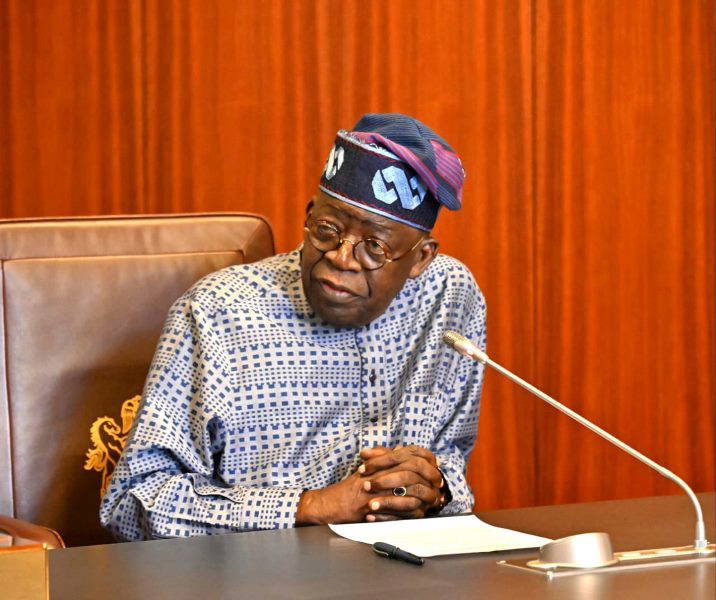
President Bola Tinubu’s administration is expected to face fresh scrutiny from American lawmakers as the United States prepares to examine Nigeria’s efforts to protect Christians and address persistent insecurity in parts of the country.
The US House of Representatives has scheduled a hearing for Thursday, November 12, 2026, to assess the Nigerian government’s response to allegations of religious persecution and attacks on Christian communities.
The session will begin at 11 a.m. at the Rayburn House Office Building in Washington, DC, and is expected to be streamed live on YouTube.
The hearing will be chaired by Chris Smith, chairman of the House Foreign Affairs Subcommittee on Africa, whose office announced the meeting on Monday.
Titled “One Year Later: Assessing Nigeria’s Efforts to Protect Christians and Secure the Middle Belt,” the hearing will examine what progress Nigeria has made over the past year in protecting vulnerable communities, improving security across the Middle Belt and holding those responsible for religiously motivated violence accountable.
US Lawmakers to Hear From Two Panels
Two separate panels are expected to provide evidence and perspectives during the congressional hearing.
The first panel will feature senior officials from the US Department of State, including Frank Garcia, Assistant Secretary of State for African Affairs, and Riley Barnes, Assistant Secretary of State for Democracy, Human Rights and Labour.
The second panel will include representatives from organisations involved in religious freedom advocacy, humanitarian concerns and international policy.
Those expected to appear are Nina Shea of the Hudson Institute, Ryan Brown, chief executive officer of Open Doors US, and Oge Onubogu of the Centre for Strategic and International Studies (CSIS).
Their contributions are expected to help lawmakers examine the security situation in Nigeria, the protection of religious communities and the government’s response to attacks.
US Considers Possible Measures Against Religious Violence
Beyond assessing Nigeria’s progress, American lawmakers are also expected to discuss what further steps Washington could take to encourage the Nigerian government to protect Christians and other vulnerable communities, including non-radical Muslim populations.
The hearing comes amid growing international attention to attacks carried out by extremist groups and other armed organisations in different parts of Nigeria.
The discussions could place additional pressure on the Tinubu administration to demonstrate that it is taking effective measures to prevent violence, protect civilians and bring perpetrators to justice.
However, the hearing is not a court trial. It is a congressional oversight process through which US lawmakers will question officials and experts about Nigeria’s security and religious freedom record.
How Nigeria Was Returned to the US Religious Freedom Watchlist
The planned hearing comes almost a year after US President Donald Trump redesignated Nigeria as a Country of Particular Concern (CPC) over alleged violations of religious freedom.
Nigeria was first placed on the list in 2020 during Trump’s first administration. However, former US President Joe Biden removed the country from the designation after taking office.
On October 31, 2025, Trump announced that Nigeria would once again be placed on the list, arguing that Christians were facing serious threats from extremist groups operating in the country.
He accused radical Islamist organisations of killing thousands of Christians and warned that Washington could reconsider its relationship with Nigeria if the violence continued.
Trump Threatened to Cut Aid and Consider Military Action
Trump’s decision to redesignate Nigeria as a Country of Particular Concern was accompanied by strong warnings to the Nigerian government.
In a statement issued on November 1, 2025, the US president threatened to withdraw American assistance if the Nigerian authorities failed to address the killings.
He also suggested that the United States could consider military action against terrorist organisations responsible for attacks on Christian communities.
Trump said:
“If the Nigerian Government continues to allow the killing of Christians, the USA will immediately stop all aid and assistance to Nigeria, and may very well go into that now-disgraced country, ‘guns-a-blazing,’ to completely wipe out the Islamic terrorists who are committing these horrible atrocities.
“I am hereby instructing our Department of War to prepare for possible action. If we attack, it will be fast, vicious, and sweet, just like the terrorist thugs attack our cherished Christians.”
The remarks generated significant international attention and raised questions about the future of US-Nigeria relations.
Nigeria and US Strengthen Security Cooperation
Despite the diplomatic tension surrounding Trump’s comments, Nigeria and the United States have since moved towards closer military cooperation aimed at tackling terrorist groups operating in the country, particularly in the northern region.
The partnership reflects the shared security concerns of both countries and the need to address the activities of extremist organisations.
The upcoming congressional hearing will provide an opportunity for US lawmakers to examine the progress of Nigeria’s security response and determine whether additional diplomatic or policy measures are necessary.
For the Tinubu administration, the outcome of the discussions could have implications for Nigeria’s international reputation, relations with Washington and future security cooperation.
The Nigerian government will therefore face renewed pressure to demonstrate that it is protecting citizens regardless of their religious background and taking meaningful action against those responsible for attacks.


Asake, Wizkid, Tems and Ayra Starr Lead 2027 Grammy African Music Nominations

Burna Boy and Shakira’s ‘Dai Dai’ Earns 2027 Grammy Nomination

Davido, Tems and Ayra Starr Earn 2027 Grammy Nominations
-
Gov. Ambode11 years ago
Lagos commences prosecution of 28 tax defaulters
-
Donald Trump6 years ago
Twitter, Facebook block Trump over Capitol attack posts
-
Politics9 years ago
Presidency reacts to Wole Soyinka’s comments about Buhari Being in a ‘Trance’
-
Fashion9 years ago
These ’90s fashion trends are making a comeback in 2017
-
Entertainment9 years ago
The final 6 ‘Game of Thrones’ episodes might feel like a full season
-

 Entertainment3 years ago
Portable boasts of owning 30 Mansion Across Lagos and Ogun State
-
Fashion9 years ago
According to Dior Couture, this taboo fashion accessory is back
-
 Mohbad2 years ago
DNA Test Demanded for Mohbad’s Son Before Singer’s Burial