
Politics
Millions of Nigerians Struggling to Survive – Lawyer Criticises Shettima Over Dancing at APC Rallies

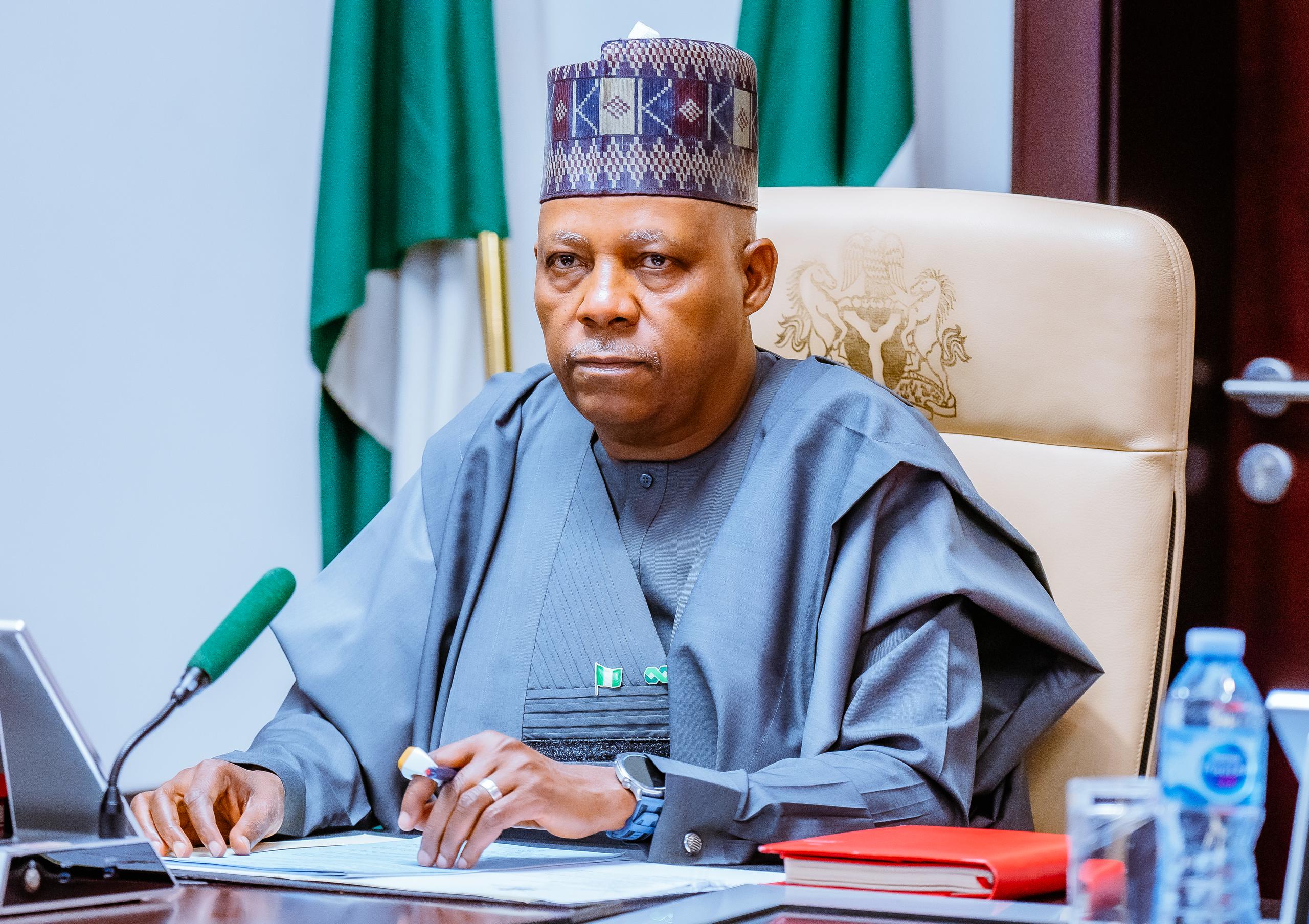
Kano-based human rights lawyer Abba Hikima has criticised Vice President Kashim Shettima over his dancing and celebratory performances at All Progressives Congress (APC) campaign rallies, describing the displays as insensitive to the challenges confronting millions of Nigerians.
Hikima argued that the Vice President’s conduct was inappropriate at a time when many citizens were battling severe economic difficulties, insecurity, kidnappings and killings across different parts of the country.
The lawyer expressed his displeasure in a statement shared on his official Facebook page on Sunday, urging individuals responsible for managing Shettima’s public engagements to advise him against what he described as embarrassing displays at political gatherings.
According to Hikima, public officials should demonstrate greater awareness of the suffering of citizens, particularly when the country is facing serious economic and security challenges.
He questioned the appropriateness of political celebrations when the government continues to face criticism over its responsibility to protect the lives and property of Nigerians.
“No responsible Nigerian leader should be seen dancing and celebrating after failing to secure the lives of the very people he swore to protect,” Hikima stated.
He further observed that millions of Nigerians were struggling to meet their basic needs while communities continued to experience security threats, including abductions and violent attacks.
“As he dances, millions of Nigerians are struggling to survive amid economic hardship, rising insecurity, kidnappings and killings,” he added.
The human rights lawyer maintained that political leaders should be mindful of the country’s prevailing circumstances and avoid actions that could be interpreted as disregarding the difficulties faced by ordinary citizens.
Hikima also emphasised that holding public office comes with an obligation to demonstrate compassion, responsibility and an understanding of the concerns of the people.
“This is hardly a time for our leaders to be seen indulging in public celebrations without due regard for the grim realities confronting ordinary citizens,” he said.
He concluded by stressing that effective leadership goes beyond political activities and public appearances, noting that empathy, sensitivity and concern for citizens’ welfare should remain central to the responsibilities of elected officials.


As Nigeria gradually moves towards the 2027 general elections, political attention, as observed by SteadyGist, is increasingly shifting to Northern Nigeria, a region whose electoral influence could prove decisive in determining who occupies the presidency and controls the balance of power at the National Assembly and state levels.
Taraba’s 2027 governorship race features Agbu Kefas, Emmanuel Bwacha, Abubakar Tutare and 16 other candidates as political parties prepare for a major contest.
Will the ruling All Progressives Congress, APC, consolidate its growing influence across the state, or will opposition parties successfully mobilise voters and turn dissatisfaction with governance into electoral gains?
Can the Peoples Democratic Party, PDP, rebuild its traditional support base following significant defections? Will the African Democratic Congress, ADC, Accord Party, AP, All Progressives Grand Alliance, APGA, Nigeria Democratic Congress, NDC, and other political platforms alter the established political equation?
These questions are increasingly defining conversations around the forthcoming general elections.
Beyond party manifestos, campaign promises and political declarations, the battle may ultimately revolve around economic hardship, insecurity, unemployment, public confidence in government, political defections and the strength of grassroots mobilisation.
About the Taraba State governorship election 2027
While the Independent National Electoral Commission, INEC, has listed 19 governorship candidates, making the contest one of the most crowded political battles in the state’s recent history, Steady Gist observed that prominent contenders include incumbent Governor Agbu Kefas of the APC, former Senator Emmanuel Bwacha of the PDP and former Senator Abubakar Umar Tutare of the ADC.
The political drama is particularly interesting because of the reversal of political platforms between Kefas and Bwacha.
Kefas, who won the 2023 governorship election under the PDP, has since defected to the APC, while Bwacha, who contested the same election under the APC, is now the PDP governorship flag bearer.
This political development has not only altered traditional calculations but also introduced a new dimension to the contest.
The question confronting political observers is whether the movement of influential politicians between parties will automatically translate into a corresponding movement of voters.
“The governor’s political calculations will largely revolve around his administration’s performance, party structures, grassroots mobilisation and ability to sustain the political alliances that have emerged following his defection,” an APC chieftain, Ismaila Abba, said.
“His administration’s free education policy, particularly at the primary and secondary school levels, alongside other development initiatives, is expected to feature prominently in the campaign,” Abba stated.
Voters, according to political analysts, will have the opportunity to examine the administration’s performance in infrastructure, healthcare, education, employment, security, agriculture and economic development.
The governor will therefore face an important question: Can the political advantage of incumbency translate into broad-based electoral support across Taraba North, Taraba Central and Taraba South?
For the APC, the task goes beyond celebrating the governor’s defection. The party must demonstrate that its expanded political structure can command genuine grassroots support.
Governor Kefas and APC stakeholders in the state, however, remain optimistic that the party will not only emerge victorious in the governorship election but also secure victories for President Bola Ahmed Tinubu and its candidates contesting National Assembly and State House of Assembly seats in 2027.
“The people have no doubt, and they’ve given all the assurance that Mr President is reaching out to them through me, and for that reason, they are going to vote for Mr President. Taraba State is for APC 100 percent,” Kefas said.
“In Taraba State, we are not contesting elections with any party, anybody. We only have candidates from other parties participating in elections with us,” the governor added.
Bwacha’s governorship ambition
For former Senator Emmanuel Bwacha, the 2027 election represents another opportunity to pursue his governorship ambition.
His emergence as the PDP candidate places him at the centre of the opposition’s efforts to challenge the APC administration.
Bwacha brings legislative experience, political networks and previous electoral experience to the contest, having represented Taraba South in the National Assembly.
However, the PDP faces the challenge of rebuilding its structures following the departure of its former governor and other influential political figures.
The party must demonstrate that it can survive the political realignment and maintain a credible support base across the state.
“The PDP faces the challenge of rebuilding its structures following the departure of its former governor and other influential political figures. The party must demonstrate that it can survive the political realignment and maintain a credible support base across the state,” Ande Kelvin argued.
Bwacha’s challenge will be to convince voters that his candidacy represents a viable alternative and that the PDP can offer a different approach to governance.
The central question is whether the former senator can consolidate his established political networks and attract support beyond his immediate political constituency.
“The stage is now set for the 2027 political contest. The mistakes witnessed during the 2023 general election will not be repeated,” Bwacha said.
Citing alleged economic hardship and high levels of corruption under the incumbent administration, Bwacha expressed confidence that the PDP has the capacity to form the next government in the state in 2027.
“Today, governance has drifted away from the people. Public service has been replaced with self-serving interests. Our vision is simple: to restore Taraba to a place where every citizen feels a sense of belonging. A state where leadership serves the people, and the people trust their leaders,” he boasted.
Tutare and the ADC factor
Another political figure whose participation has added to the unfolding drama is former Senator Abubakar Umar Tutare, the ADC governorship candidate.
Tutare’s candidacy presents another platform for voters seeking alternatives to the APC and PDP.
His previous experience in the Senate and political connections could provide opportunities to engage different constituencies across the state.
However, the ADC’s major task will be translating political visibility into a sustainable grassroots structure across Taraba’s 16 local government areas.
The party must demonstrate that it has the organisational capacity to compete beyond the influence of prominent individuals.
“Let me tell you for free that the ADC is the party to beat come 2027. Tarabans are tired of this failed administration in the state and the country at large. They want a strong alternative, and that is what we offer,” Tutare said.
16 other candidates in the race
Although the APC, PDP and ADC have attracted considerable attention, the contest is not limited to these three parties.
Professor Jerome Nyameh of the Accord Party, Danjuma Usman Shiddi of APGA and Yahaya Mohammed Sani of the Nigeria Democratic Congress are among the other candidates seeking the governorship.
The participation of 19 candidates creates a wider political field and introduces the possibility of a fragmented electoral contest.
For smaller political parties, the election provides an opportunity to present alternative programmes, mobilise dissatisfied voters and challenge the dominance of established political structures.
However, their ability to translate political ambitions into significant electoral support will depend on organisation, resources, visibility and grassroots acceptance.
The 2027 election could therefore test whether Taraba voters remain largely aligned with established political parties or are increasingly willing to explore alternative platforms.
Ultimately, the contest will be a test of political loyalty, the strength of party structures, the appeal of individual candidates and, perhaps most importantly, the extent to which voters believe their lives have improved under successive administrations.

Financial commentator and social media personality Gehgeh has called on President Bola Tinubu to step aside after completing his first four-year term, insisting that Nigerians should be given the opportunity to elect a new leader in 2027.
Gehgeh made the appeal in a video shared online, where he criticised Tinubu’s administration, dismissed the possibility of former Vice President Atiku Abubakar returning to power and expressed his preference for Peter Obi in the next presidential election.
In his message to Tinubu, Gehgeh acknowledged the President as an older figure but advised him to consider following the example of former President Olusegun Obasanjo, who returned to farming and other personal engagements after leaving office.
He argued that Tinubu should accept that his time in government was coming to an end rather than seek another mandate from Nigerians.
Addressing the President, Gehgeh said:
“Tinubu, you’re like a father figure to me, let me advise you like a father and son. Sir, you can’t lead Nigeria, go and learn from Obasanjo. He’s now a farmer, learn from him. Leave Nigerians alone, you don old.”
The social media personality also questioned Tinubu’s availability and response to the country’s challenges, alleging that the President frequently travelled abroad while Nigerians continued to battle economic difficulties.
According to Gehgeh, the country needs a leader who remains accessible and actively addresses national concerns rather than one he believes is more visible during photo opportunities and public appearances.
He described Tinubu’s approach to leadership as one characterised by uncertainty, saying:
“The president we have in Nigeria is a president of ‘let me see what I can do’.”
Gehgeh maintained that Tinubu had already had sufficient time to demonstrate his leadership abilities and should not pursue another four-year term.
“Tinubu, you rule for four years, nothing more you can give, leave there,” he added.
Gehgeh Rejects Atiku’s Return, Declares Support for Peter Obi
Turning his attention to Atiku Abubakar, Gehgeh argued that Nigerians had previously experienced his leadership during his eight years as Vice President under Obasanjo and should consider giving another candidate an opportunity.
He questioned what additional contribution the former vice president could make if elected President in 2027.
“We don test Atiku before, he be vice president, we don’t want again, there’s nothing to rule again,” Gehgeh stated.
Despite acknowledging the political challenges facing Peter Obi, the former Anambra State governor, Gehgeh said he would rather support him than vote for either Tinubu or Atiku.
He described Obi as an “online president”, suggesting that his strong presence on social media might not necessarily translate into electoral victory in Nigeria.
Nevertheless, Gehgeh maintained that he preferred voting for Obi over what he described as a “settings president”.
“Peter Obi, you be online president and an online president cannot win in Nigeria, but I rather vote for an online president than to vote for a settings president,” he said.
Gehgeh subsequently appealed to Nigerians to give Obi an opportunity to govern the country, describing the 2027 election as an important opportunity for the former governor to lead Nigeria.
He also made a personal declaration about his future in the country if Obi fails to win the presidential election.
“Obi come and rule Nigeria, is your turn to rule and this is the last chance. And if Obi no win, nothing concern me with Nigeria again. Am using this opportunity to call on travel agents ahead, prepare my visa if Obi no win, am going to Ghana,” he added.
His comments have added to the growing political conversations surrounding the 2027 presidential election, with discussions about Tinubu’s performance, Atiku’s political future and Obi’s chances already attracting attention across social media.
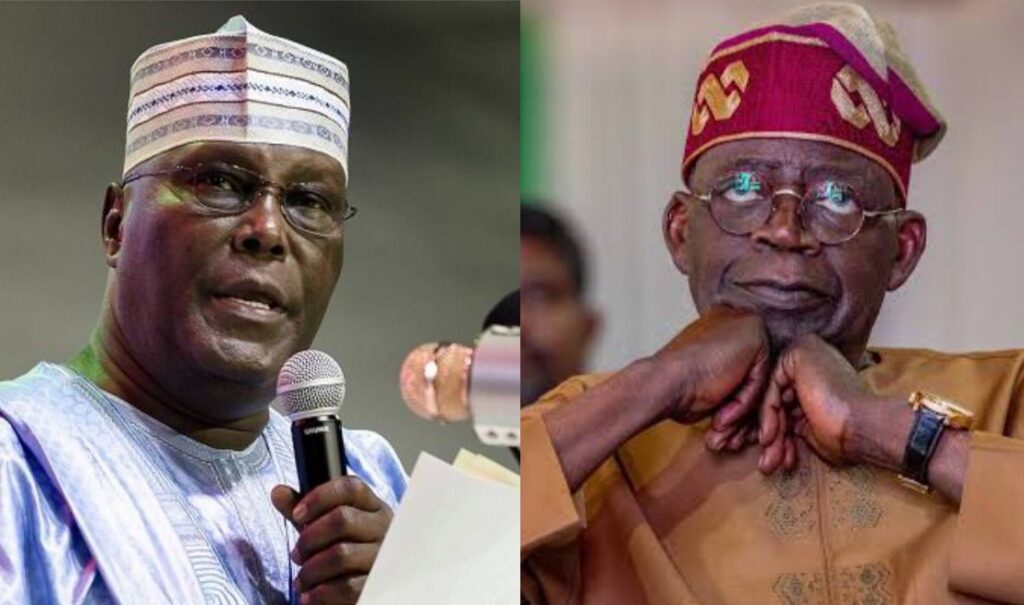
The African Democratic Congress, ADC, presidential candidate, Atiku Abubakar, has slammed President Bola Tinubu over the worsening electricity situation in the country.
In a statement by his senior media aide, Phrank Shuaibu, on Sunday, Atiku said Tinubu’s electricity excuses cannot light a single home in Nigeria.
He said Nigerians are tired of excuses and propaganda from the Tinubu administration, while millions of homes and businesses remain in total darkness.
According to him, instead of fixing the power sector, the Tinubu government has continued to give excuses for its failure, despite increasing electricity tariffs.
“Tinubu’s electricity excuses cannot light a single home. Nigerians need light, not excuses.
“Across Nigeria, consumers are placed in Bands A, B, C, D and E and charged different rates. In many areas, Band A customers pay about N209.50 per unit before VAT.
“Rates for the other bands vary by state and electricity provider. Yet across every band, the same hardship endures: the power fails, but the bill arrives. No family should have to weigh the cost of electricity against the cost of food. No business should be left to pay more while receiving less.
“The government now says it plans to end electricity subsidies from 2027, even as it insists there will be no immediate tariff increase. Nigerians are entitled to a clear answer: what will happen to their bills when the subsidy ends,” Atiku queried.
He called on the Tinubu administration to stop playing politics with electricity and provide stable power supply for Nigerians who are suffering.
Politics
2027: Makinde Accuses Past and Present Nigerian Leaders of Squandering the Nation’s Vast Resources
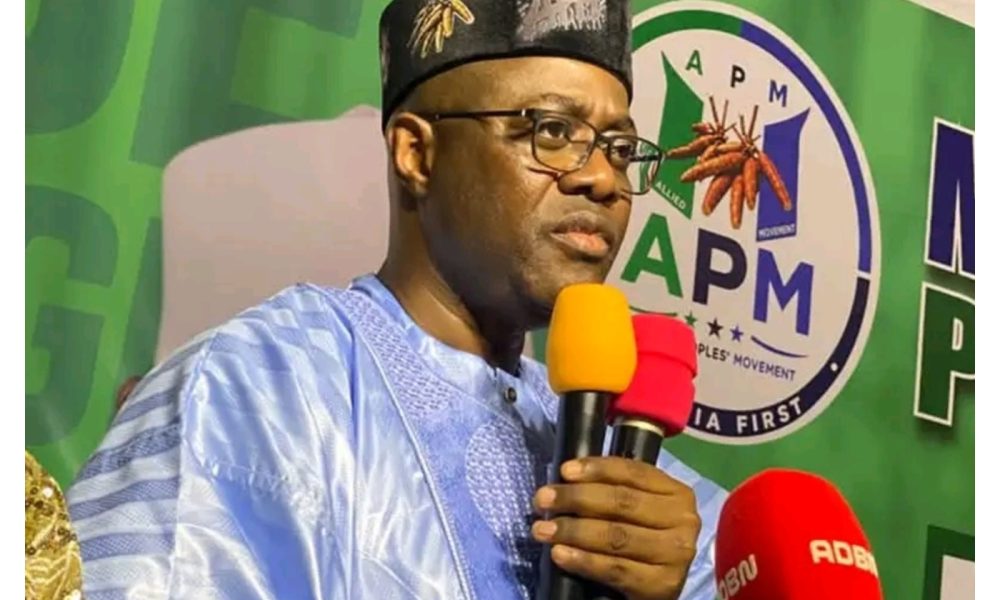
Seyi Makinde, the presidential candidate of the Allied Peoples’ Movement (APM), has taken a swipe at successive Nigerian administrations, accusing both former and incumbent leaders of failing to translate the country’s enormous natural and human resources into meaningful national prosperity.
According to the Oyo State Governor, Nigeria’s persistent developmental setbacks cannot be attributed to a shortage of resources. Rather, he believes the country has been held back by an alarming deficiency of visionary thinking, innovative policies and purposeful leadership.
Makinde made these remarks on Wednesday in Abuja during the official unveiling of his party’s manifesto ahead of the 2027 presidential election.
Speaking at the event, the APM presidential hopeful maintained that Nigeria possesses virtually everything required to become a prosperous and influential nation. However, successive governments have struggled to formulate and implement the ideas necessary to unlock that enormous potential.
He argued that the country’s greatest predicament is not its natural endowment but the quality of leadership entrusted with managing its affairs.
” Nigeria has the resources and the capacity to achieve greatness. Nigeria is rich in natural resources and human resources, but our leaders are poor in ideas,” he said.
Makinde Says Government Must Make Life Easier for Nigerians
Beyond his criticism of previous and present administrations, Makinde outlined what he considers the fundamental responsibility of government: improving the everyday circumstances of ordinary citizens.
He maintained that governance should not revolve around elaborate political declarations or promises that rarely translate into tangible improvements. Instead, public institutions must demonstrate their relevance by making life more affordable, accessible and dignified for the population.
The APM candidate insisted that Nigeria requires a functional leadership structure capable of addressing the difficulties confronting citizens rather than perpetuating a cycle of unfulfilled assurances.
He further rejected the prevailing tendency to portray Nigeria as an inherently poor country, arguing that such a description overlooks the extraordinary wealth and productive capacity within its borders.
APM Presidential Candidate Demands Greater Accountability
Makinde also emphasised the necessity of institutional accountability, insisting that political promises must be accompanied by clearly defined responsibilities and practical implementation frameworks.
According to him, every commitment made by political officeholders should identify the government institution responsible for its execution, establish a realistic delivery timetable and provide measurable benchmarks through which citizens can independently assess performance.
His position suggests that Nigerians should no longer be expected to accept political assurances without demanding verifiable evidence of progress.
He also called for stronger national institutions capable of addressing the country’s political divisions, reconciling competing interests and maintaining stability.
Makinde warned that persistent conflicts and political disagreements must not be permitted to derail Nigeria’s developmental aspirations.
Makinde Criticises Federal Government Over Electricity Crisis
The Oyo governor also turned his attention to the persistent electricity challenges confronting the country, criticising the Federal Government for what he described as an attempt to transfer its responsibilities to state governments.
He questioned the handling of the power sector and urged Nigerians to demand accountability from the authorities responsible for delivering reliable electricity.
For Makinde, the electricity crisis represents another example of the broader governance challenges undermining economic productivity and national development.
Reliable electricity remains indispensable to industrial expansion, commercial activities, employment generation and the survival of small businesses. Consequently, the inability to establish a dependable power supply continues to impose considerable hardship on households and enterprises.
Makinde Raises Concerns Over Nigeria’s Electoral Act
On electoral matters, the APM presidential candidate expressed reservations about the country’s existing electoral framework.
He cautioned that the current provisions could produce a president without sufficiently broad support from the Nigerian electorate.
Makinde further warned that weaknesses within the electoral arrangement could create opportunities for political compromises capable of eroding confidence in democratic institutions.
He maintained that electoral laws should strengthen democratic legitimacy rather than create circumstances that could undermine the credibility of the political process.
Makinde Calls on Nigerians to Consider APM’s 2027 Manifesto
Concluding his remarks, Makinde encouraged Nigerians to examine the Allied Peoples’ Movement manifesto, question established political assumptions and consider alternative approaches to governing the country.
He urged citizens to participate in the pursuit of a different political and economic direction, one that prioritises practical achievements over rhetoric.
With the 2027 presidential election approaching, his comments add another dimension to the growing political conversation surrounding leadership quality, resource management, electricity, institutional accountability and Nigeria’s economic future.
His central argument is that Nigeria’s abundant resources should translate into visible improvements in the lives of its citizens, rather than remain an unrealised promise under successive governments.


The Four Tax Reform Acts Explained
Why Nigeria Needed Tax Reform

Tinubu’s Tax Reform Explained: Everything Nigerians Need to Know About the New Tax Laws
-
Gov. Ambode11 years ago
Lagos commences prosecution of 28 tax defaulters
-
Politics9 years ago
Presidency reacts to Wole Soyinka’s comments about Buhari Being in a ‘Trance’
-
Fashion9 years ago
These ’90s fashion trends are making a comeback in 2017
-
Donald Trump6 years ago
Twitter, Facebook block Trump over Capitol attack posts
-
Entertainment9 years ago
The final 6 ‘Game of Thrones’ episodes might feel like a full season
-

 Entertainment3 years ago
Portable boasts of owning 30 Mansion Across Lagos and Ogun State
-
Fashion9 years ago
According to Dior Couture, this taboo fashion accessory is back
-
 Mohbad2 years ago
DNA Test Demanded for Mohbad’s Son Before Singer’s Burial