
Politics
Presidency reacts to Wole Soyinka’s comments about Buhari Being in a ‘Trance’

The Presidency has reacted to comments made by Professor Wole Soyinka in which he called on Nigerians to defend themselves in the heat of prevailing security challenges.

Speaking about the call during his appearance on Politics Today, the Special Adviser to the President on Media and Publicity, Mr Femi Adesina, noted that the Federal Government would review the suggestion from the Nobel Laureate.
“What Professor Soyinka has said can just be one of the proffered solutions which will be looked out. I have spoken about the nine governors’ committee headed by Professor (Yemi) Osinbajo who is the Vice President of the country” he said.
Soyinka told journalists in Lagos that the phenomenon of herdsmen and farmers clashes was not new, but an issue that has graduated to an alarming state in the last eight years.
According to Femi Adesina, the issue of herdsmen and farmers crisis is a national emergency that “determines to be interrogated from different sides. There is a security apparatus in the country which is working to secure the country,” Adesina insisted. “Yes, there are challenges, but that apparatus is rising to those challenges. I would not agree with you that it is failing.”
The administration of President Muhammadu Buhari has come under severe criticisms in recent times over Nigeria’s security among other issues.
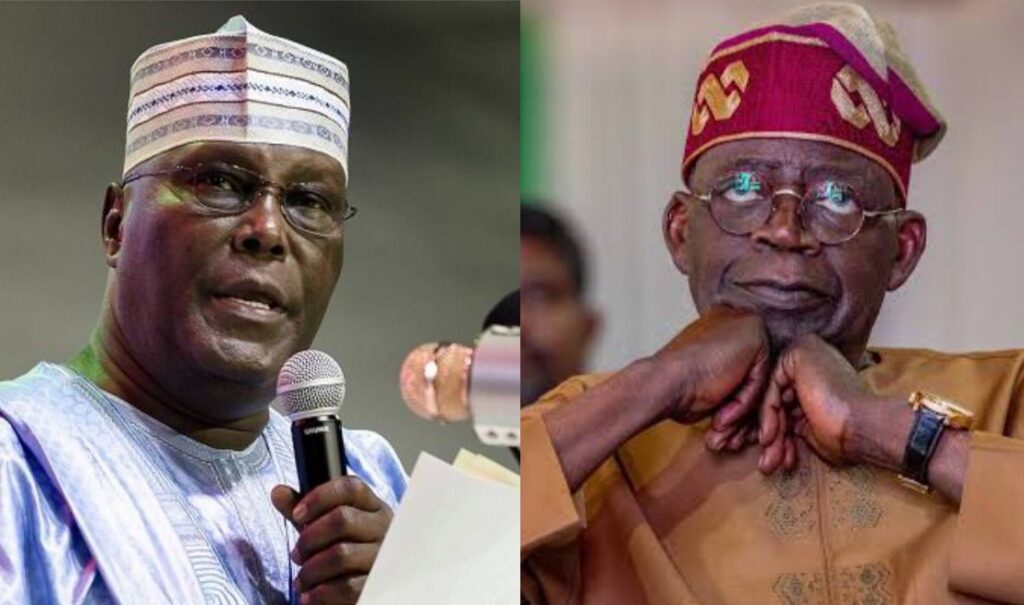
The African Democratic Congress, ADC, presidential candidate, Atiku Abubakar, has slammed President Bola Tinubu over the worsening electricity situation in the country.
In a statement by his senior media aide, Phrank Shuaibu, on Sunday, Atiku said Tinubu’s electricity excuses cannot light a single home in Nigeria.
He said Nigerians are tired of excuses and propaganda from the Tinubu administration, while millions of homes and businesses remain in total darkness.
According to him, instead of fixing the power sector, the Tinubu government has continued to give excuses for its failure, despite increasing electricity tariffs.
“Tinubu’s electricity excuses cannot light a single home. Nigerians need light, not excuses.
“Across Nigeria, consumers are placed in Bands A, B, C, D and E and charged different rates. In many areas, Band A customers pay about N209.50 per unit before VAT.
“Rates for the other bands vary by state and electricity provider. Yet across every band, the same hardship endures: the power fails, but the bill arrives. No family should have to weigh the cost of electricity against the cost of food. No business should be left to pay more while receiving less.
“The government now says it plans to end electricity subsidies from 2027, even as it insists there will be no immediate tariff increase. Nigerians are entitled to a clear answer: what will happen to their bills when the subsidy ends,” Atiku queried.
He called on the Tinubu administration to stop playing politics with electricity and provide stable power supply for Nigerians who are suffering.
Politics
2027: Makinde Accuses Past and Present Nigerian Leaders of Squandering the Nation’s Vast Resources

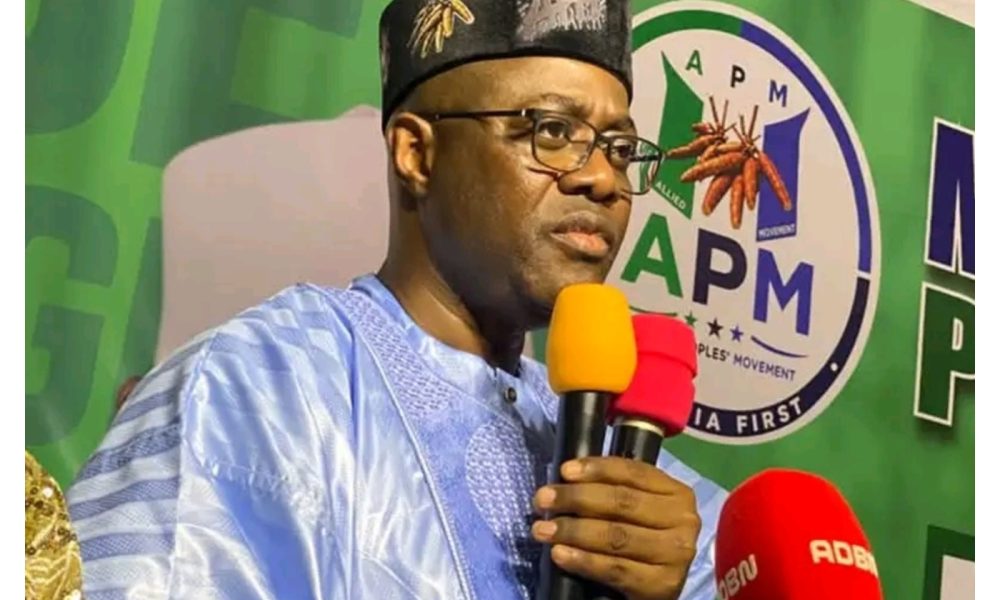
Seyi Makinde, the presidential candidate of the Allied Peoples’ Movement (APM), has taken a swipe at successive Nigerian administrations, accusing both former and incumbent leaders of failing to translate the country’s enormous natural and human resources into meaningful national prosperity.
According to the Oyo State Governor, Nigeria’s persistent developmental setbacks cannot be attributed to a shortage of resources. Rather, he believes the country has been held back by an alarming deficiency of visionary thinking, innovative policies and purposeful leadership.
Makinde made these remarks on Wednesday in Abuja during the official unveiling of his party’s manifesto ahead of the 2027 presidential election.
Speaking at the event, the APM presidential hopeful maintained that Nigeria possesses virtually everything required to become a prosperous and influential nation. However, successive governments have struggled to formulate and implement the ideas necessary to unlock that enormous potential.
He argued that the country’s greatest predicament is not its natural endowment but the quality of leadership entrusted with managing its affairs.
” Nigeria has the resources and the capacity to achieve greatness. Nigeria is rich in natural resources and human resources, but our leaders are poor in ideas,” he said.
Makinde Says Government Must Make Life Easier for Nigerians
Beyond his criticism of previous and present administrations, Makinde outlined what he considers the fundamental responsibility of government: improving the everyday circumstances of ordinary citizens.
He maintained that governance should not revolve around elaborate political declarations or promises that rarely translate into tangible improvements. Instead, public institutions must demonstrate their relevance by making life more affordable, accessible and dignified for the population.
The APM candidate insisted that Nigeria requires a functional leadership structure capable of addressing the difficulties confronting citizens rather than perpetuating a cycle of unfulfilled assurances.
He further rejected the prevailing tendency to portray Nigeria as an inherently poor country, arguing that such a description overlooks the extraordinary wealth and productive capacity within its borders.
APM Presidential Candidate Demands Greater Accountability
Makinde also emphasised the necessity of institutional accountability, insisting that political promises must be accompanied by clearly defined responsibilities and practical implementation frameworks.
According to him, every commitment made by political officeholders should identify the government institution responsible for its execution, establish a realistic delivery timetable and provide measurable benchmarks through which citizens can independently assess performance.
His position suggests that Nigerians should no longer be expected to accept political assurances without demanding verifiable evidence of progress.
He also called for stronger national institutions capable of addressing the country’s political divisions, reconciling competing interests and maintaining stability.
Makinde warned that persistent conflicts and political disagreements must not be permitted to derail Nigeria’s developmental aspirations.
Makinde Criticises Federal Government Over Electricity Crisis
The Oyo governor also turned his attention to the persistent electricity challenges confronting the country, criticising the Federal Government for what he described as an attempt to transfer its responsibilities to state governments.
He questioned the handling of the power sector and urged Nigerians to demand accountability from the authorities responsible for delivering reliable electricity.
For Makinde, the electricity crisis represents another example of the broader governance challenges undermining economic productivity and national development.
Reliable electricity remains indispensable to industrial expansion, commercial activities, employment generation and the survival of small businesses. Consequently, the inability to establish a dependable power supply continues to impose considerable hardship on households and enterprises.
Makinde Raises Concerns Over Nigeria’s Electoral Act
On electoral matters, the APM presidential candidate expressed reservations about the country’s existing electoral framework.
He cautioned that the current provisions could produce a president without sufficiently broad support from the Nigerian electorate.
Makinde further warned that weaknesses within the electoral arrangement could create opportunities for political compromises capable of eroding confidence in democratic institutions.
He maintained that electoral laws should strengthen democratic legitimacy rather than create circumstances that could undermine the credibility of the political process.
Makinde Calls on Nigerians to Consider APM’s 2027 Manifesto
Concluding his remarks, Makinde encouraged Nigerians to examine the Allied Peoples’ Movement manifesto, question established political assumptions and consider alternative approaches to governing the country.
He urged citizens to participate in the pursuit of a different political and economic direction, one that prioritises practical achievements over rhetoric.
With the 2027 presidential election approaching, his comments add another dimension to the growing political conversation surrounding leadership quality, resource management, electricity, institutional accountability and Nigeria’s economic future.
His central argument is that Nigeria’s abundant resources should translate into visible improvements in the lives of its citizens, rather than remain an unrealised promise under successive governments.
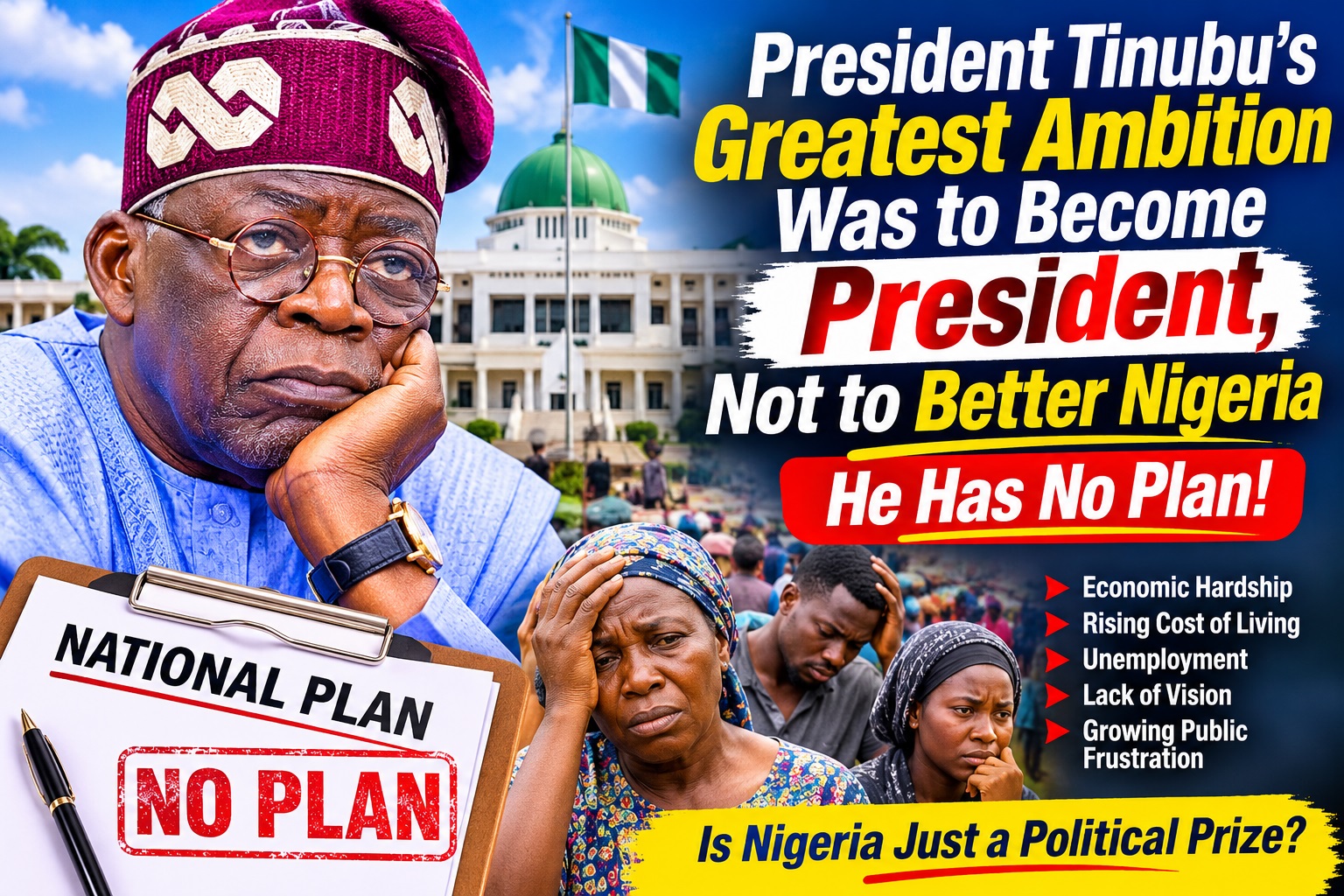
President Tinubu Has No Plan for Nigeria? His Ambition Was to Become President
President Tinubu’s ambition to become Nigeria’s president is facing fresh criticism as economic hardship, rising living costs and concerns about his administration’s direction continue to dominate public debate. Few politicians in Nigeria’s modern history pursued the presidency with the determination, patience, and strategic calculation demonstrated by President Bola Ahmed Tinubu. For decades, his supporters described him as a master political strategist, a kingmaker, and one of the most influential figures in Nigerian politics. His eventual victory in the 2023 presidential election was, for many observers, the culmination of a lifelong ambition.
However, three years into his administration, a growing number of Nigerians are beginning to ask a difficult question: Was Tinubu’s ultimate goal simply to become president, or did he genuinely possess a comprehensive vision for transforming Nigeria?
For many critics, the answer is becoming increasingly clear. They argue that Tinubu’s greatest ambition was not necessarily to build a better Nigeria but rather to achieve the presidency itself.
The Long Road to the Presidency
Unlike many politicians who emerge suddenly on the national stage, Tinubu’s presidential ambition was a long-term project. From his time as governor of Lagos State to his role in building political alliances across the country, he spent decades cultivating influence and establishing networks that would eventually propel him to the nation’s highest office.
His famous declaration during the 2023 election season that it was his “turn” to become president reflected a belief shared by many of his supporters that he had earned the position through years of political investment and sacrifice.
The problem, however, is that winning power and exercising power effectively are two very different challenges.
Many leaders spend years planning how to acquire power but far less time developing practical solutions for the complex problems they will face once they obtain it. Critics of the Tinubu administration argue that this distinction has become increasingly visible in Nigeria today.
A Nation in Economic Distress
When Tinubu assumed office, Nigerians expected bold reforms that would improve living standards and strengthen the economy. Instead, many citizens have experienced severe economic hardship.
The removal of fuel subsidies and the floating of the naira were presented as necessary economic reforms. While economists may debate the long-term merits of these policies, the immediate consequences were devastating for millions of ordinary Nigerians.
Food prices soared.
Transportation costs skyrocketed.
Rent became increasingly unaffordable.
Small businesses struggled to survive.
The middle class continued to shrink while poverty expanded.
For many households, daily survival became more difficult than at any point in recent memory.
Critics argue that the problem was not merely the reforms themselves but the apparent absence of adequate planning to cushion their impact. Major economic changes often require carefully designed social protection measures, yet many Nigerians felt abandoned as prices rose faster than incomes.
This has fueled the perception that the administration was prepared to implement difficult policies but not prepared to manage their consequences.
The Missing Vision
One of the most persistent criticisms of the Tinubu administration is the lack of a clearly articulated national vision.
Successful leaders often inspire citizens with a compelling picture of the future. They communicate where the country is headed, why sacrifices are necessary, and how ordinary people will ultimately benefit.
Many Nigerians struggle to identify such a vision in the current administration.
What exactly is the long-term economic roadmap?
What is the strategy for reducing unemployment?
How will Nigeria become more competitive globally?
What measurable goals should citizens expect within four or eight years?
These questions remain unanswered in the minds of many critics.
Instead of a coherent national project, they see a government reacting to crises as they emerge rather than pursuing a clearly defined destination.
Governance Versus Politics
Tinubu’s political achievements are undeniable. Few individuals have demonstrated his ability to build coalitions, influence elections, and maintain relevance over several decades.
Yet governance demands a different set of skills.
Politics is about winning.
Governance is about delivering.
Politics focuses on strategy.
Governance focuses on results.
Politics seeks power.
Governance seeks progress.
Many Nigerians believe that the administration continues to operate with the mindset of a political campaign rather than a government focused on solving practical problems.
This perception has contributed to growing public frustration and declining confidence in the administration’s ability to address the country’s challenges.
The Burden on Ordinary Nigerians
Perhaps the strongest criticism of the current administration is that ordinary Nigerians have carried the burden of reform while seeing little evidence of corresponding benefits.
Citizens are repeatedly told that the economy is improving, that foreign investment is increasing, and that difficult decisions today will produce prosperity tomorrow.
Yet many people judge governments not by statistics but by lived experience.
They evaluate leadership based on what they can afford to eat, how easily they can pay rent, whether they can find employment, and whether they feel hopeful about the future.
For millions of Nigerians, those indicators suggest a worsening reality rather than meaningful progress.
History’s Final Judgment
It is still too early to write the final verdict on the Tinubu presidency. History often judges leaders differently than contemporary observers do.
Some reforms that appear painful today may eventually yield positive results. Economic transformations often require time before benefits become visible.
Nevertheless, governments cannot rely indefinitely on promises of future success. Citizens expect tangible improvements in their daily lives.
The central question facing President Tinubu’s administration is therefore simple: Was the presidency the destination, or merely the starting point?
If the ultimate goal was simply to become president, then history may remember Tinubu as a master politician who achieved his lifelong ambition.
But if his goal is to be remembered as a transformative leader, then he must demonstrate through action, policy, and results that his presidency is about more than personal political achievement.
The Nigerian people did not elect a strategist. They elected a president.
And presidents are ultimately judged not by how hard they worked to gain power, but by what they did with it once they had it.
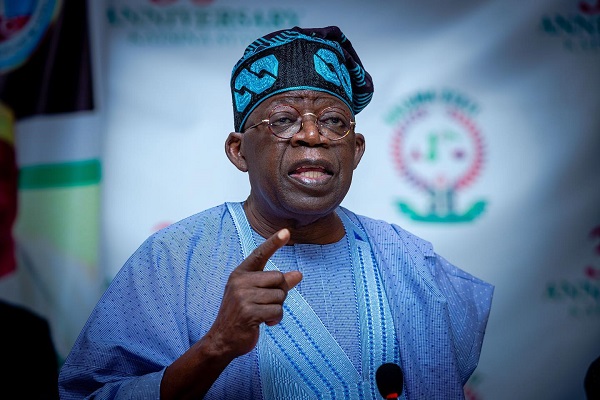
President Bola Tinubu and Federal Executive Council have scrapped the Niger Delta Ministry and the Ministry of Sports Development.
Special Adviser to the president on Information and Strategy, Bayo Onanuga, disclosed this in a post on his official X handle on Wednesday.
He said the decisions were taken at the meeting of the FEC in Abuja.
According to him, “there will now be a Ministry of Regional Development to oversee all the regional development commissions, such as Niger Delta Development Commission, North West Development Commission, South West Development Commission, North East Development Commission”.
He also stated that the National Sports Commission will take over the role of the Ministry of Sports henceforth.
During the FEC meeting, the president also approved the merger of the Ministry of Tourism with the Ministry of Culture and Creative Economy.

Your excuses cannot light single home’ – Atiku knocks Tinubu over blackout

2027: Makinde Accuses Past and Present Nigerian Leaders of Squandering the Nation’s Vast Resources

2026 U-17 WWC: CAF Hails Nigeria’s Flamingos After Historic Victory Over Brazil
-
Gov. Ambode11 years ago
Lagos commences prosecution of 28 tax defaulters
-
Fashion9 years ago
These ’90s fashion trends are making a comeback in 2017
-
Donald Trump6 years ago
Twitter, Facebook block Trump over Capitol attack posts
-
Entertainment9 years ago
The final 6 ‘Game of Thrones’ episodes might feel like a full season
-

 Entertainment3 years ago
Portable boasts of owning 30 Mansion Across Lagos and Ogun State
-
Fashion9 years ago
According to Dior Couture, this taboo fashion accessory is back
-
Entertainment9 years ago
The old and New Edition cast comes together to perform
-
Sports9 years ago
Phillies’ Aaron Altherr makes mind-boggling barehanded play