
Food
Milo vs Ovaltine vs Bournvita: Which Is Best? Vitamins, Minerals, Sugar and Nutrition Compared

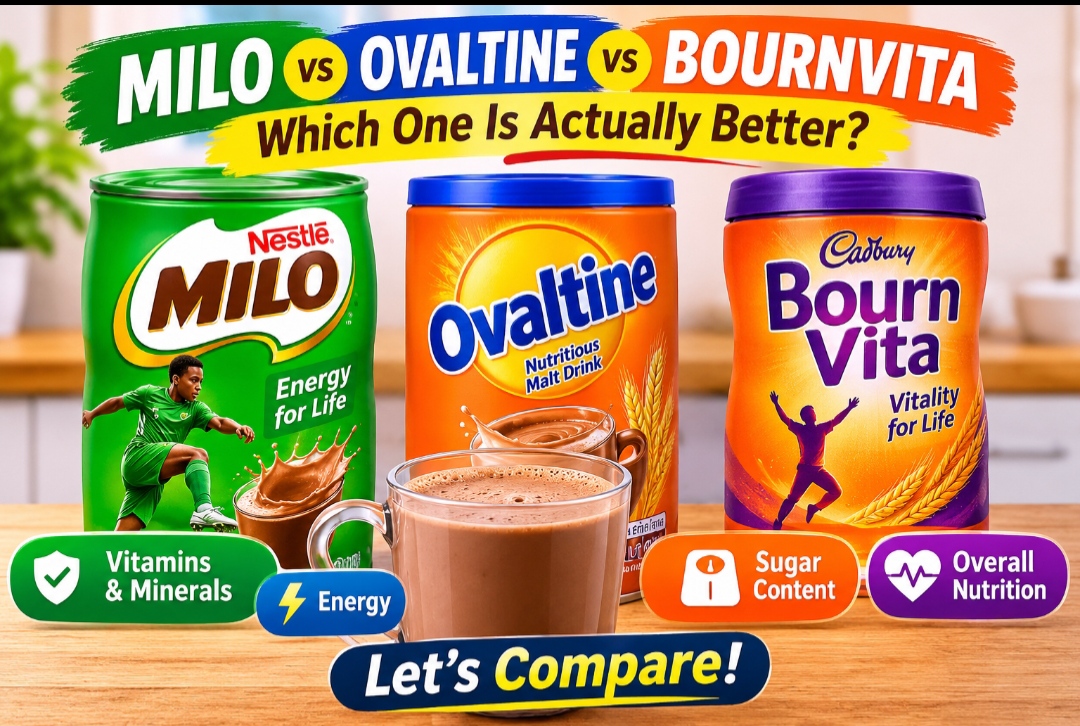

Milo vs Ovaltine vs Bournvita — which one is actually the best?
Walk into almost any Nigerian supermarket and you will find these three familiar names competing for space on the shelf: Milo, Ovaltine and Bournvita.
For many families, they are part of breakfast. Children take them before school, adults mix them with milk in the morning, and some people use them as a quick energy drink during a busy day.
But there is an important question that advertising alone cannot answer:
Which one gives you the best nutritional value?
All three are fortified malted or cocoa-based beverages containing varying amounts of vitamins and minerals. However, their formulations are not identical. They also differ in sugar, calories, protein and the range of micronutrients they provide.
In this detailed comparison, we examine Milo, Ovaltine and Bournvita, including their vitamins and minerals, sugar content, potential benefits, limitations and which may be the better choice for children, adults, energy and everyday consumption.
Quick answer: If your main priority is the variety of vitamins and minerals, Ovaltine and Bournvita have an advantage over standard Milo. However, the “best” choice depends on your nutritional needs, serving size, sugar intake and the exact formulation sold in your market.
Milo vs Ovaltine vs Bournvita at a Glance
| Feature | Milo | Ovaltine | Bournvita |
|---|---|---|---|
| Main ingredients | Malt, cocoa, milk ingredients | Malt, milk and cocoa ingredients | Malt, cocoa and milk-related ingredients |
| Vitamins | B2, B3, B6, B12, C, D | Broad B-vitamin range, C, E and others depending on formulation | A, B-complex, C, D and others depending on formulation |
| Key minerals | Calcium, iron, phosphorus | Calcium, magnesium, iron, zinc | Calcium, iron, zinc and other minerals depending on formulation |
| Micronutrient variety | Good | Very broad | Very broad |
| Sugar | Relatively high | Relatively high | Relatively high |
| Best feature | Balanced fortified profile | Wide micronutrient variety | Wide fortified profile |
| Best for | General fortified drink | People prioritising nutrient variety | Families wanting a broad fortified beverage |
Important: Nutritional formulations can vary by country, product version and reformulation. Always check the nutrition panel on the specific pack you purchase.
1. Milo: What Vitamins and Minerals Does It Contain?
Milo is one of the most recognisable malted chocolate drinks in Nigeria. Nestlé’s Nigerian Milo Original formulation is fortified with six vitamins and three minerals.
The nutrients highlighted in the Nigerian formulation include:
Vitamins in Milo
Vitamin B2 (Riboflavin)
Riboflavin contributes to normal energy metabolism and helps the body process nutrients.
Vitamin B3 (Niacin)
Niacin is involved in energy metabolism and supports normal functioning of the nervous system.
Vitamin B6
Vitamin B6 contributes to normal protein and glycogen metabolism and supports normal nervous-system function.
Vitamin B12
Vitamin B12 is important for normal red blood cell formation and nervous-system function.
Vitamin C
Vitamin C supports normal immune function and is involved in collagen formation and iron absorption.
Vitamin D
Vitamin D contributes to normal calcium absorption and is important for maintaining healthy bones and teeth.
Minerals in Milo
Calcium
Calcium is essential for bones and teeth and also contributes to normal muscle function.
Iron
Iron is needed to make haemoglobin, the protein responsible for carrying oxygen around the body.
Phosphorus
Phosphorus contributes to normal energy metabolism and helps maintain bones and teeth.
One 20g serving of Milo Original in Nigeria provides approximately 154mg calcium, 3.9mg iron and 143mg phosphorus, according to Nestlé Nigeria’s product information.
That makes Milo particularly interesting for people looking for a fortified drink containing calcium and iron.
The main concern with Milo
The nutritional benefits should be considered alongside its sugar content.
Milo Original contains approximately 52.2g of sugar per 100g of powder, meaning a 20g serving provides roughly 10.4g of sugar before considering any additional ingredients used during preparation.
That is one reason portion control matters.
If you already eat a sweet breakfast and then add several spoonfuls of Milo plus additional sugar, the total amount of added/free sugar in the meal can increase considerably.
2. Ovaltine: A Wide Range of Vitamins and Minerals
Ovaltine is particularly interesting when the comparison focuses on micronutrient variety.
Depending on the specific formulation and market, Ovaltine Original provides a broad range of vitamins, including:
- Vitamin B1
- Vitamin B2
- Vitamin B3
- Vitamin B5
- Vitamin B6
- Vitamin B12
- Vitamin C
- Vitamin E
- Folic acid
- Biotin
Its mineral profile includes nutrients such as:
- Calcium
- Magnesium
- Iron
- Zinc
This broad range is one of Ovaltine’s biggest nutritional selling points.
Why do these vitamins matter?
The B vitamins are involved in several processes related to energy metabolism and normal nervous-system function.
Vitamin B1, for example, contributes to normal carbohydrate metabolism.
Vitamin B2 helps the body metabolise nutrients.
Vitamin B3 contributes to normal energy metabolism.
Vitamin B6 and B12 are involved in normal blood formation and nervous-system function.
Folic acid is important for normal cell division and blood formation.
Biotin contributes to normal energy metabolism and maintenance of normal skin and hair.
Vitamin C supports normal immune function and helps increase iron absorption.
Vitamin E functions as an antioxidant that helps protect cells from oxidative stress.
Ovaltine therefore has a strong argument if your main criterion is the number and variety of micronutrients included in the formulation.
But don’t confuse variety with quantity
This is an important distinction.
Seeing 10 or more vitamins listed on a label does not mean you are receiving large amounts of all of them.
A product can contain many micronutrients in relatively small quantities.
The same principle applies when comparing Ovaltine with Bournvita and Milo.
3. Bournvita: What Vitamins and Minerals Does It Provide?
Bournvita is another popular malted chocolate beverage consumed by Nigerian families.
The current Bournvita Nigeria formulation is advertised as containing 17 essential vitamins and minerals.
Its highlighted nutrients include:
- Vitamin A
- B-complex vitamins
- Vitamin D
- Calcium
- Iron
- Zinc
Depending on the exact formulation, additional micronutrients may also be present.
Vitamin A
Vitamin A contributes to normal vision and supports normal immune function.
B Vitamins
B vitamins are involved in energy metabolism and other important processes throughout the body.
Vitamin D
Vitamin D helps the body absorb calcium and contributes to the maintenance of normal bones and teeth.
Calcium
Calcium is important for bones and teeth and contributes to normal muscle function.
Iron
Iron is essential for haemoglobin production and oxygen transport.
Zinc
Zinc contributes to normal immune function and has roles in cell division and normal metabolism.
Bournvita therefore has a significant advantage when the comparison is based on the breadth of its fortified micronutrient profile.
However, just like Milo and Ovaltine, Bournvita should not be considered a replacement for nutritious whole foods.
Milo vs Ovaltine vs Bournvita: Which Has More Vitamins?
This is one of the most common questions people ask.
The answer depends on whether you mean the number of different vitamins or the amount of a particular vitamin in a serving.
These are not the same thing.
Milo
The standard Nigerian Milo Original formulation highlights six vitamins:
- B2
- B3
- B6
- B12
- C
- D
Ovaltine
Ovaltine Original formulations can provide a broader collection of vitamins, including several B vitamins, vitamin C, vitamin E, folate, biotin and pantothenic acid.
Bournvita
The Nigerian Bournvita formulation is marketed as containing 17 essential vitamins and minerals, including vitamin A, B-complex vitamins and vitamin D.
Winner for variety
Ovaltine and Bournvita have the strongest case for micronutrient variety.
Milo still provides a useful combination of vitamins and minerals, but its standard Nigerian formulation has a narrower list.
Which Has More Minerals?
The major minerals commonly associated with these beverages include:
Calcium:
Important for bones, teeth and muscle function.
Iron:
Necessary for haemoglobin and oxygen transport.
Magnesium:
Involved in muscle and nerve function and energy metabolism.
Zinc:
Important for immune function and normal metabolism.
Phosphorus:
Important for bones, teeth and energy metabolism.
Ovaltine has a particularly broad mineral profile in the formulation reviewed, including calcium, magnesium, iron and zinc.
Bournvita also provides several important minerals and is promoted in Nigeria as a source of calcium, iron and zinc.
Milo focuses on calcium, iron and phosphorus.
Therefore, if your primary objective is mineral variety, Ovaltine and Bournvita again have an advantage.
Which Has the Most Sugar?
This is where consumers need to be careful.
People sometimes see the words “vitamins,” “calcium,” “iron” or “energy” on a beverage and automatically assume that the product is healthy regardless of how much sugar it contains.
That is not how nutrition works.
A fortified drink can provide useful micronutrients while also contributing a significant amount of sugar to your diet.
For example, Milo Original contains approximately 52.2g sugar per 100g of powder.
One current Ovaltine Original formulation contains approximately 48g sugar per 100g of powder.
Bournvita formulations also contain substantial carbohydrate and sugar, although the precise amount depends on the product version and market.
Therefore, consumers should:
- Follow the recommended serving size.
- Avoid unnecessarily adding extra sugar.
- Consider the sugar already present in milk if the drink is prepared with sweetened or flavoured milk.
- Avoid treating these beverages as unlimited drinks simply because they contain vitamins.
Which Is Best for Children?
This question deserves a more careful answer.
Children need nutrients such as protein, iron, calcium, vitamin D and other vitamins and minerals for normal growth and development.
A fortified malt drink can contribute some of these nutrients, but it should not be considered the foundation of a child’s diet.
For a growing child, foods such as:
- Eggs
- Fish
- Beans
- Meat
- Milk and other dairy foods
- Fruits
- Vegetables
- Whole grains
- Nuts and seeds where age-appropriate
provide a much broader nutritional package.
So which of the three is best for children?
There isn’t enough justification to declare one universally superior.
If a child enjoys Milo, Ovaltine or Bournvita, the more important considerations are:
portion size + total sugar intake + overall diet + individual nutritional needs.
A child consuming a balanced diet does not become significantly healthier simply because one malt drink contains more listed vitamins than another.
Which Is Best for Adults?
For healthy adults, the same principle applies.
Milo, Ovaltine and Bournvita can be consumed as part of a balanced diet, but they are not nutritionally equivalent to a complete breakfast.
If you want a more filling breakfast, consider combining a modest serving of your preferred malt drink with protein and fibre.
For example:
Milo/Ovaltine/Bournvita + eggs + whole-grain bread + fruit
is nutritionally more substantial than relying on a large cup of sweetened malt drink alone.
The protein and fibre from the accompanying foods can also help make the meal more satisfying.
Which Is Best for Energy?
All three can provide energy because they contain carbohydrates.
But there is an important misconception here.
Feeling energetic after drinking a sweet beverage does not necessarily mean the drink is providing sustained energy.
A sugary drink can provide readily available carbohydrate, but a balanced meal containing carbohydrates, protein, fibre and healthy fats is generally a more complete nutritional approach.
Therefore, if your goal is simply a quick source of calories, any of the three can contribute energy.
If your goal is sustained energy throughout the day, focus on your overall meal rather than choosing a malt drink solely because it is marketed as an energy source.
Which Is Best for Weight Gain?
This is another area where people often misunderstand malt drinks.
Milo, Ovaltine and Bournvita can contribute calories to the diet, particularly when prepared with milk.
However, drinking large quantities simply to gain weight is not necessarily a healthy strategy.
Healthy weight gain should generally focus on nutrient-dense foods that provide protein, carbohydrates, healthy fats, vitamins and minerals.
Examples include:
- Eggs
- Beans
- Fish
- Chicken
- Avocado
- Groundnuts and other nuts
- Milk
- Greek yoghurt
- Oats
- Rice
- Potatoes
- Whole grains
A malt drink can be incorporated into such a diet, but it should not become the primary method of increasing calories.
Which Is Better for People Trying to Reduce Sugar?
This is where none of the standard versions should automatically be called a winner.
The better strategy is to compare the actual sugar per serving on the package you are buying.
You should also consider how much powder you use.
Someone who uses twice the recommended serving can easily consume twice the listed sugar from the powder.
And if additional table sugar is added, the total increases further.
If reducing sugar is your priority, look for a lower-sugar formulation where available and avoid adding extra sugar.
Milo vs Ovaltine vs Bournvita: Our Ranking
After looking at the major nutritional factors, here is our practical ranking.
🥇 1. Ovaltine — Best for Micronutrient Variety
Ovaltine gets the top position when the main criterion is the breadth of vitamins and minerals in the formulation reviewed.
It provides a wide selection of B vitamins and other vitamins alongside minerals such as calcium, magnesium, iron and zinc.
However, its relatively high sugar content means that portion control remains important.
Best for: People who prioritise a broad range of fortified micronutrients.
🥈 2. Bournvita — Strong All-Round Fortification
Bournvita comes close behind.
Its Nigerian formulation is advertised as containing 17 essential vitamins and minerals, making it particularly attractive from a micronutrient-variety perspective.
Its combination of vitamin A, B-complex vitamins, vitamin D, calcium, iron and zinc gives it a strong nutritional profile for a fortified beverage.
Best for: Families looking for a broadly fortified malted cocoa beverage.
🥉 3. Milo — Good and Familiar Fortified Option
Milo comes third in our micronutrient-variety ranking, but that does not mean it is a poor choice.
Its Nigerian formulation provides useful quantities of calcium, iron and phosphorus, together with vitamins B2, B3, B6, B12, C and D.
Its nutritional profile is simply more focused than those of the other two products.
Best for: People who prefer Milo and want a convenient fortified source of several vitamins and minerals.
The Important Question: Is Ovaltine Actually Healthier Than Milo or Bournvita?
Not necessarily.
This is perhaps the most important conclusion from the comparison.
More vitamins on the label do not automatically make a product healthier.
Imagine two products:
Product A contains 6 vitamins and 3 minerals.
Product B contains 10 vitamins and 5 minerals.
It would be tempting to say Product B is healthier.
But what if Product B also contains considerably more sugar per serving?
Or what if someone drinks three servings instead of one?
The nutritional picture changes.
Your health is determined by your overall dietary pattern, not simply by the number of nutrients listed on one beverage.
How to Make Milo, Ovaltine or Bournvita Healthier
If you enjoy these drinks, you do not necessarily need to eliminate them.
Instead, consider how you consume them.
1. Don’t automatically add extra sugar
The powder already contains sugar.
Adding more may unnecessarily increase the sugar content of your drink.
2. Watch your serving size
More powder means more calories and more sugar.
Follow the recommended serving rather than assuming that a bigger cup is better.
3. Consider what you eat alongside it
Pair your drink with nutrient-dense foods.
Eggs, beans, whole-grain bread, oats, fruit or other nutritious foods can make the meal more balanced.
4. Don’t use it as a replacement for vegetables and fruit
Fortification does not turn a chocolate malt drink into a substitute for whole foods.
Fruits and vegetables provide fibre and a wide range of naturally occurring compounds that these beverages do not provide in the same way.
5. Read the label
This is especially important because formulations can change.
Look at:
- Serving size
- Calories
- Total carbohydrate
- Sugar
- Protein
- Calcium
- Iron
- Vitamins
- Minerals
Don’t rely solely on advertising claims.
Frequently Asked Questions
Is Milo healthier than Bournvita?
Not necessarily. Milo provides six vitamins and three minerals in its standard Nigerian Original formulation, while Bournvita’s Nigerian formulation is advertised as containing 17 essential vitamins and minerals. However, the overall nutritional quality depends on serving size, sugar content and the rest of the diet.
Is Ovaltine better than Milo?
If your main criterion is the variety of vitamins and minerals, Ovaltine has an advantage in the formulation reviewed. But that does not automatically make it healthier for every person.
Which has more vitamins, Milo or Bournvita?
Bournvita’s Nigerian formulation is marketed as containing 17 essential vitamins and minerals, while Milo Original highlights six vitamins and three minerals. Therefore, Bournvita has the broader fortified profile.
Which is best for children?
None should be considered universally best. Children need a balanced diet containing adequate protein, vegetables, fruits, whole grains and other nutrient-rich foods. Milo, Ovaltine or Bournvita can be included in moderation.
Can Milo, Ovaltine or Bournvita make you gain weight?
They can contribute calories to the diet, especially when prepared with milk. However, healthy weight gain should not depend primarily on sweetened malt drinks.
Can I drink Milo every day?
For most healthy people, a moderate serving can fit into a balanced diet. The important considerations are portion size, sugar intake and what else you eat during the day.
Which one has the most calcium?
The answer depends on the exact product formulation and serving size. Milo Original in Nigeria provides a notable amount of calcium per serving, while Ovaltine and Bournvita formulations can also provide substantial calcium. Compare the nutrition panels of the exact products available to you.
Which is best for energy?
All three provide carbohydrate and therefore calories. However, a balanced meal containing carbohydrates, protein and fibre is generally a better strategy for sustained energy than relying on a sweetened beverage alone.
Can these drinks replace breakfast?
No. A malted chocolate beverage can accompany breakfast, but it should not normally be considered a complete replacement for a balanced meal.
Final Verdict: Milo vs Ovaltine vs Bournvita
There is no universal winner.
If we judge strictly by micronutrient variety, Ovaltine takes the lead, with Bournvita close behind and Milo offering a more focused selection of vitamins and minerals.
But if we judge by overall dietary health, the difference becomes much less dramatic.
The healthiest choice is not necessarily the product with the longest list of vitamins.
It is the product that fits reasonably into a balanced diet, is consumed in an appropriate portion and does not lead to excessive sugar or calorie intake.
Our final ranking:
For vitamin and mineral variety:
🥇 Ovaltine
🥈 Bournvita
🥉 Milo
For a focused calcium + iron + B-vitamin profile:
🥇 Milo
For broad micronutrient fortification:
🥇 Ovaltine / Bournvita
For everyday consumption:
All three can fit into a balanced diet when consumed in moderation.
The biggest takeaway is simple:
Don’t choose a malt drink simply because the label says it contains vitamins and minerals. Look at the entire nutrition panel, control your serving size, avoid unnecessary added sugar and make sure most of your nutrition comes from whole and minimally processed foods.
Nutrition Disclaimer
This article is for general educational and informational purposes only and should not be considered medical or personalised nutritional advice. Nutritional formulations may differ by country, product version and manufacturing date. Always check the label of the specific product you purchase. People with diabetes, kidney disease, allergies, nutritional deficiencies or other medical conditions should discuss their dietary choices with a qualified healthcare professional or registered dietitian.
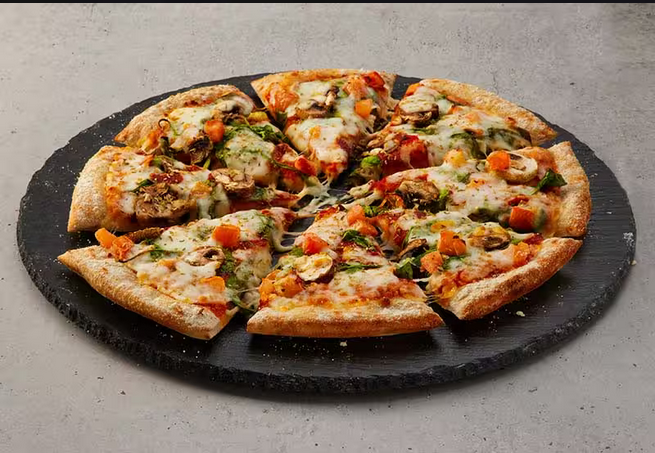
Trio Pizza, the beloved Italian creation, has captured the hearts and taste buds of people worldwide. Among its many variations, one style stands out for its unique blend of flavors and toppings – Trio Pizza. In this blog post, we’ll embark on a culinary journey to explore the delectable world of trio pizza, from its origins to cooking techniques, nutritional aspects, and cultural significance.
Trio Pizza
Trio pizza, also known as triple topping pizza, traces its roots back to the traditional Italian pizza but with a twist. Its history is intertwined with the evolution of pizza itself, as chefs and pizzaiolos experimented with different toppings to create diverse flavor profiles. Over time, trio pizza emerged as a favorite among pizza enthusiasts, offering a tantalizing trio of toppings that elevate the pizza experience to new heights.
Trio Pizza Recipes and Toppings
At the heart of every trio pizza lies a harmonious blend of recipes – freshly made dough, flavorful tomato sauce, gooey cheese, and, of course, three main toppings that steal the show. From classic combinations like pepperoni, mushrooms, and bell peppers to gourmet options like prosciutto, arugula, and goat cheese, the possibilities are endless. Each bite is a symphony of flavors, delighting the palate with a perfect balance of savory, tangy, and umami notes.
Cooking Techniques
Achieving the perfect trio pizza requires skillful cooking techniques. Whether baked in a traditional brick oven, a wood-fired oven for that rustic charred crust, or a modern convection oven for a crispy finish, the cooking method plays a crucial role in bringing out the flavors and textures of the pizza. The art lies in mastering the heat, timing, and rotation to ensure a golden crust, melted cheese, and perfectly cooked toppings.
Variations and Customization
One of the joys of trio pizza is its versatility and customization options. While traditional recipes abound, chefs and home cooks alike can get creative with their toppings, sauces, and even crust types. Gluten-free crusts, vegan cheese alternatives, and innovative toppings cater to diverse dietary preferences, making trio pizza inclusive and accessible to all pizza lovers.
Nutritional Values:
Contrary to common misconceptions, trio pizza can be a nutritious meal when prepared with wholesome ingredients and mindful portions. A balanced trio pizza with lean proteins, fresh vegetables, and whole-grain crust offers a satisfying meal rich in essential nutrients. By providing nutritional information and tips for healthier pizza choices, we empower pizza enthusiasts to enjoy their favorite dish guilt-free.
Pairings and Accompaniments
Enhance the trio pizza experience with well-chosen pairings and accompaniments. A crisp salad with a zesty vinaigrette, a refreshing craft beer or chilled wine, and a decadent dessert like tiramisu or gelato elevate the meal to a culinary extravaganza. The interplay of flavors and textures creates a memorable dining experience that lingers long after the last slice is savored.
Cultural Significance
Beyond its gastronomic appeal, trio pizza holds cultural significance in various regions and communities. From New York’s iconic pizzerias to Naples’ traditional pizzerias, each locale adds its unique flair to trio pizza, reflecting local ingredients, traditions, and culinary heritage. Celebrate the cultural diversity of trio pizza and savor a slice of culinary history with every bite.
Health and Wellness
Embracing a balanced approach to trio pizza, we emphasize the importance of mindful eating and moderation. By incorporating fresh ingredients, reducing sodium and saturated fats, and opting for whole-grain crusts, trio pizza can be part of a wholesome diet. Educating consumers about smart pizza choices empowers them to enjoy their favorite comfort food without compromising on health.
Trending Flavors and Innovations
As culinary trends evolve, so do the flavors and innovations in trio pizza. From fusion-inspired toppings to artisanal cheeses and exotic spices, chefs continually push the boundaries of creativity, offering exciting new twists on this timeless classic. Stay updated on the latest pizza trends and indulge in a world of culinary delights with innovative trio pizza creations.
Conclusion
In conclusion, trio pizza is more than just a dish – it’s a culinary masterpiece that celebrates flavors, creativity, and cultural diversity. Whether enjoyed at a cozy pizzeria or homemade with love, trio pizza brings people together, sparking conversations and creating lasting memories. Explore the endless possibilities of trio pizza, and let your taste buds embark on a flavorful journey that delights the senses and nourishes the soul.


Hilda Dokubo Challenges Dave Umahi Over His Achievements at APC Campaign Event [VIDEO]

‘We Came for the Money’: Jos Residents Express Frustration at Tinubu’s APC Rally [VIDEO]

Rauf Aregbesola Urges Nigerians to Endure Hardship Until January 2027, Calls for APC’s Removal Through Ballot
-
Gov. Ambode11 years ago
Lagos commences prosecution of 28 tax defaulters
-
Donald Trump6 years ago
Twitter, Facebook block Trump over Capitol attack posts
-
Politics9 years ago
Presidency reacts to Wole Soyinka’s comments about Buhari Being in a ‘Trance’
-
Fashion9 years ago
These ’90s fashion trends are making a comeback in 2017
-
Entertainment9 years ago
The final 6 ‘Game of Thrones’ episodes might feel like a full season
-

 Entertainment3 years ago
Portable boasts of owning 30 Mansion Across Lagos and Ogun State
-
Fashion9 years ago
According to Dior Couture, this taboo fashion accessory is back
-
 Mohbad2 years ago
DNA Test Demanded for Mohbad’s Son Before Singer’s Burial