
News
Fountain of Life Church Removes Jimmy Odukoya as Senior Pastor


The Fountain of Life Church in Lagos has announced the removal of Pastor Jimmy Odukoya as its Senior Pastor, citing a leadership succession arrangement established by the church’s late founder, Pastor Taiwo Odukoya.
Fountain of Life Church, Pastor Jimmy Odukoya, Taiwo Odukoya, church leadership succession
The decision was made public in a statement released on Tuesday by the church’s Board of Trustees following a review of its constitution and the documented instructions left by its founder before his death in 2023.
According to the board, the review was necessary to implement the leadership succession plan established by Taiwo Odukoya to guide the church’s leadership after his demise.
Following the review, the trustees announced that Jimmy Odukoya was no longer recognised as the church’s Senior Pastor, adding that the decision would take immediate effect.
The board made its position clear in the statement, saying:
“Consequently, Pastor Jimmy Odukoya is no longer recognised as the Senior Pastor of The Fountain of Life Church, effective immediately.”
The announcement marks a significant development in the leadership of the Lagos-based church, which was founded by Pastor Taiwo Odukoya.
The board’s decision is expected to generate further discussions about the church’s leadership structure and the succession arrangements put in place by its late founder.
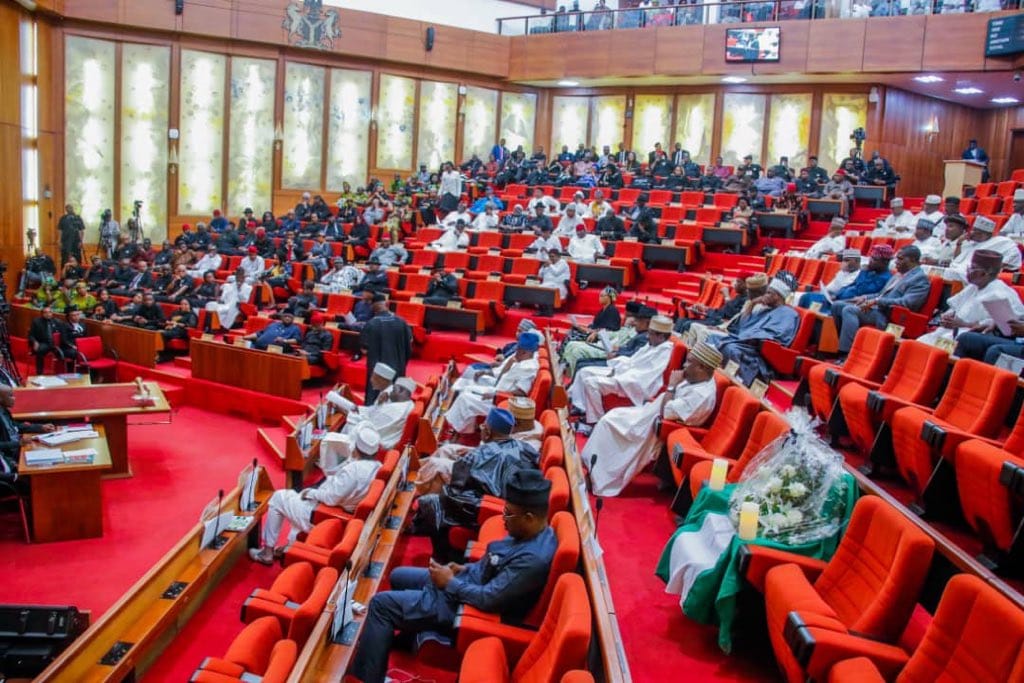
The Nigerian Senate has directed the Clerk of the National Assembly, Kamoru Ogunlana, to transmit the Sixth Alteration Bill, 2026, which provides for the establishment of state police, to President Bola Tinubu for presidential assent.
SteadyGist reports that the decision was reached during Wednesday’s plenary following the adoption of a motion sponsored by the Senate Leader, Opeyemi Bamidele, representing Ekiti Central Senatorial District.
Moving the motion, Bamidele explained that the National Assembly had processed the executive bill in line with Section 9(1) of the 1999 Constitution, as amended, to pave the way for the establishment of state police within Nigeria’s policing structure.
He recalled that both the Senate and the House of Representatives had overwhelmingly approved the proposed constitutional amendment on June 24 and July 23, respectively, securing more than the required two-thirds majority in both chambers.
According to him, the bill was subsequently forwarded to the 36 State Houses of Assembly for consideration and approval, as required by the Constitution.
Bamidele confirmed that all 36 state legislatures had submitted their resolutions on the proposed amendment to the National Assembly.
He said the Senate was satisfied that the constitutional requirements under Section 9(1) and (2) had been fulfilled, clearing the way for the bill to be transmitted to the President for assent.
The Senate Leader also commended President Tinubu for his support throughout the legislative process.
However, he called on the President to forward the proposed National Policing Bill to the National Assembly for consideration. He said the legislation would provide the framework needed to make state policing operational across the country.
Barau, Akpabio Commend Tinubu and National Assembly
Also speaking, Deputy Senate President Barau Jibrin praised members of the constitutional review committee for their contributions towards the passage of the amendment.
He described the development as a major achievement for the Tinubu administration and the 10th National Assembly, saying it would become an important part of the country’s legislative history.
Barau also reiterated his appreciation to Tinubu for his commitment to the establishment of state police in Nigeria.
Similarly, Senate President Godswill Akpabio said all 36 states had endorsed the proposed constitutional alteration, describing the unanimous support as a significant step towards restructuring the country’s policing system.
Akpabio said the next priority would be to establish the operational framework for state police and ensure that their responsibilities do not conflict with those of the Nigeria Police Force.
“So we have 36 over 36; this is unanimous, the 250 million Nigerians have spoken and the next thing we need to do is just the operationalisation and also to ensure that there is no conflict between the state police and the federal police,” he said.
The Senate President further described the development as a historic achievement for the 10th National Assembly, noting that the constitutional amendment process represented a significant milestone in Nigeria’s legislative history.
He congratulated lawmakers and urged Nigerians to remain patriotic as the country moves towards the implementation of the proposed state policing system.
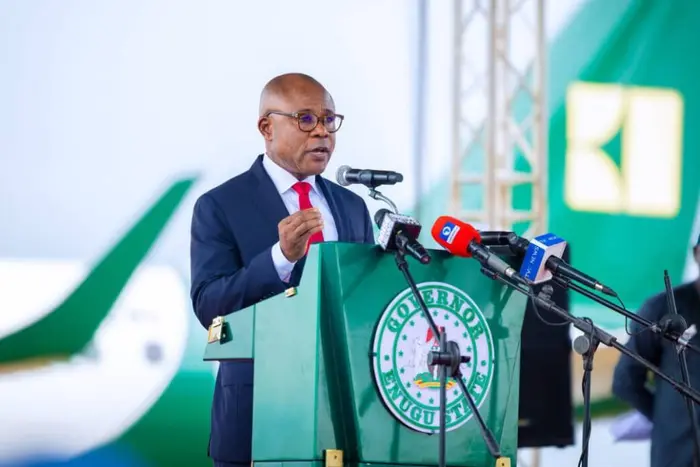
Tenants in Enugu State could soon enjoy greater protection against frequent rent increases if a proposed amendment to the state’s Landlord and Tenant Law receives approval from Governor Peter Mbah.
The Enugu State House of Assembly has passed a bill seeking to restrict how much landlords can increase residential rents, alongside proposed reductions in agency and legal fees and additional safeguards for tenants facing eviction.
One of the most notable provisions is a proposed 2 per cent limit on rent increases within a four-year period. If signed into law, the measure would significantly change how landlords review rents across the state.
However, the proposal is not entirely favourable to tenants, as it also makes provisions for landlords who undertake certain renovations to increase rent by up to 10 per cent under specified conditions.
The bill was passed during its third reading on November 17, 2026, but is still awaiting the governor’s assent.
For residents planning to rent accommodation in Enugu, here are five important things to understand about the proposed legislation.
1. Landlords May No Longer Be Able to Increase Rent Every Year
One of the biggest changes proposed in the amendment concerns how frequently landlords can review the rent charged on their properties.
Under the proposed arrangement, property owners would not be allowed to increase rent every year. Instead, they would have to wait for at least four years before introducing a rent adjustment, with the increase limited to a maximum of 2 per cent.
This provision is intended to protect tenants from sudden and repeated increases that make it difficult for households to plan their finances or maintain stable accommodation.
For instance, a tenant currently paying ₦500,000 annually would face a maximum increase of ₦10,000 under a straightforward 2 per cent calculation, bringing the annual rent to ₦510,000 after the applicable four-year period.
Similarly, someone paying ₦1 million annually would see a maximum increase of ₦20,000, taking the new rent to ₦1.02 million.
The proposal could therefore offer considerable relief to residents who have struggled with frequent rent adjustments.
However, the precise application of the rent calculation will depend on the final provisions of the legislation if it receives the governor’s approval.
2. Landlords Could Still Increase Rent by 10% After Renovations
Although the proposed legislation seeks to restrict rent increases, it does not completely remove landlords’ ability to charge higher rents.
The bill reportedly provides an exception for property owners who carry out qualifying renovations, allowing them to increase rent by as much as 10 per cent under certain conditions.
For example, if a residential apartment currently attracts an annual rent of ₦500,000, a qualifying renovation could potentially allow the landlord to increase the amount by ₦50,000, bringing the new annual rent to ₦550,000.
This provision recognises that property owners may need to recover some of the expenses incurred in improving their buildings.
However, the meaning of reasonable renovations and the requirements landlords must satisfy before applying the additional increase will be important.
Tenants should pay attention to how these conditions are defined in the final version of the law to understand when a landlord can legally rely on this exception.
3. Agency Fees and Legal Charges May Become Cheaper
Apart from controlling rent increases, the proposed amendment also targets the additional expenses tenants encounter when searching for accommodation.
For many people looking for apartments in Enugu, paying the actual rent is only part of the financial burden. Agency commissions, agreement fees and other legal charges can significantly increase the amount required before moving into a property.
The proposed legislation seeks to address this problem by introducing restrictions on fees associated with securing rented accommodation.
Okey Mbah, Chairman of the House Committee responsible for the bill, explained that the amendment was designed to reduce the financial pressure on residents.
He stated:
“This bill will subsidise over 60 per cent of what residents used to pay while trying to secure accommodation.”
Earlier provisions of the proposed legislation also suggested that estate agents would be required to obtain permits from the Enugu State Housing Development Corporation.
The proposal included limiting agency commissions to 10 per cent of the annual rent, while legal charges for tenancy agreements would also be restricted to 10 per cent.
If these provisions are retained in the final legislation, they could make renting a house in Enugu considerably more affordable.
However, tenants should wait for the governor-approved version before assuming that all the proposed fee restrictions have become enforceable.
4. Tenants Could Receive Stronger Protection Against Unlawful Eviction
Another important aspect of the proposed amendment is its emphasis on protecting tenants during eviction proceedings.
The bill seeks to ensure that landlords follow the appropriate legal procedures before taking action against tenants who occupy their properties.
According to Okey Mbah, tenants must receive proper service of court documents before legal proceedings can be initiated against them.
He explained:
“A tenant must be properly served before being charged to court. Without proper service, no case should be established or treated in the first instance.”
The provision is intended to prevent situations where tenants are taken to court without receiving the required legal notices.
If adopted in the final law, it would reinforce the importance of following due process when landlords seek to recover their properties.
Nevertheless, the proposed protection does not give tenants permission to ignore their rental obligations or occupy properties indefinitely without paying rent.
Landlords would still retain their legal rights, but they would be expected to exercise those rights through the procedures established by law.
5. Some Landlords Have Opposed the Proposed 2% Rent Cap
Despite the potential benefits for tenants, the proposed legislation has generated concerns among some property owners.
Critics argue that restricting rent increases to just 2 per cent every four years could be difficult to implement in an economy where the cost of maintaining residential properties continues to rise.
They point to increasing electricity tariffs, fuel prices, building materials, labour costs and general inflation as reasons why landlords should have greater flexibility when reviewing rental charges.
One Enugu-based landlord, Onyekwere Johnson, criticised the proposal in an interview with The Punch.
He argued that a 2 per cent rent adjustment would only be reasonable if other major expenses, particularly petroleum products and electricity tariffs, were also increasing at a similar rate.
He said:
“That would have been a natural law if the prices of petroleum products and electricity tariffs increased by two per cent. Otherwise, it is an unnatural law. It is neither sustainable nor can it be obeyed.”
Johnson further questioned why landlords should be subjected to such restrictions when other sectors of the economy were not operating under similar limitations.
He added:
“You cannot single out landlords and regulate their business while other sectors are struggling to meet the benchmark of inflation set by the managers of the Nigerian economy. It violates landlords’ rights against discrimination.”
The concerns highlight the disagreement between tenants seeking affordable accommodation and property owners who believe rent restrictions should reflect prevailing economic realities.
How the government intends to address these concerns, particularly the balance between tenants’ affordability and landlords’ maintenance expenses, could influence the eventual implementation of the legislation.
Has the Proposed 2% Rent Law Started in Enugu?
No. As of November 18, 2026, the proposed amendment has not become law.
Although the Enugu State House of Assembly passed the bill during its third reading on November 17, 2026, it still requires Governor Peter Mbah’s assent before it can take effect.
The legislation had previously passed its second reading in March 2026 and subsequently underwent a public hearing before lawmakers approved it at the third-reading stage.
Until the governor signs the bill and the legislation commences in accordance with its provisions, landlords and tenants must continue to operate under the existing tenancy laws in Enugu State.
This means landlords are not yet legally bound by the proposed 2 per cent rent increase restriction simply because the Assembly has passed the bill.
What the Proposed Enugu Rent Law Means for Tenants
If Governor Peter Mbah eventually signs the amendment into law, it could introduce significant changes to the state’s rental market.
For tenants, the proposed restrictions could mean fewer unexpected rent increases, lower accommodation-related charges and stronger protection during eviction proceedings.
Landlords, on the other hand, may face tighter restrictions when reviewing rental prices, although the proposed renovation exception could provide some flexibility.
For now, anyone planning to rent a house in Enugu should understand that the proposed changes are not yet enforceable.
The final outcome will depend on the governor’s decision and the specific provisions contained in the signed legislation.

A Delta State High Court sitting in Asaba has scheduled December 21, 2026, to deliver judgment in the murder trial involving dismissed police officer ASP Usman Nuhu, popularly known as Ogbegbe, and four other defendants.
The case stems from the fatal shooting of Oghenemine Ogidi, also known as Mine, in Effurun, Delta State.
Nuhu, who is the first defendant and the principal suspect in the alleged killing, remains in prison custody. However, the court had previously granted bail to the four other defendants standing trial alongside him.
They are Onoloko Dauroupamo, Okoh Kelechi, Goodluck Kingsley and Omonigho Ahweyevu. All four previously served in the anti-crime squad under Nuhu’s leadership at the Effurun Area Command before their dismissal from the Nigeria Police Force following the incident.
The matter returned to court on Tuesday, where lawyers representing both the prosecution and defence presented and adopted their final written addresses.
After considering the submissions from both sides, Justice Michael Obi adjourned the proceedings until December 21, when the court is expected to deliver its verdict.
The latest development brings the high-profile case closer to its conclusion. During the trial, the prosecution presented six witnesses before closing its case, after which the five defendants opened and completed their defence.
At an earlier court sitting, Nuhu’s lawyer, Uche Chibuogwu, disclosed that the defence team had deliberately decided against applying for bail for his client.
He explained that the decision was influenced by concerns over Nuhu’s personal safety and the seriousness of the charge against him.
“We did not find it necessary to file a bail application for the first defendant, one, for his own safety, and secondly, this is a capital offence, an offence of murder,” Chibuogwu had stated.
Meanwhile, the Delta State Director of Public Prosecutions, Tejiri R. Anuwhin, had provided an explanation for the release of the other four defendants on bail.
According to him, the charges against the four officers bordered on negligence, an offence punishable by a maximum of six months’ imprisonment.
Anuwhin noted that the defendants had remained in detention since June 1, arguing that keeping them behind bars for an extended period could amount to a disproportionate punishment considering the maximum sentence attached to their alleged offences.
With the final addresses now adopted, the parties are awaiting Justice Obi’s decision on December 21, 2026, when the court will determine the fate of all five defendants.
The defendants are being prosecuted over the April 26 killing of Ogidi, whose death generated widespread public outrage and resulted in the dismissal of the police officers allegedly involved from the Nigeria Police Force.

The National Chairman of the Peoples Redemption Party (PRP), Hakeem Baba-Ahmed, has criticised President Bola Tinubu’s administration, declaring that the President has lost control of the country and may no longer have enough time to reverse the damage caused by his government’s policies.
Baba-Ahmed made the remarks on Wednesday during an interview with Trust TV, where he assessed the state of Nigeria under Tinubu’s leadership.
According to the PRP chairman, the country is currently facing more serious challenges than it did when Tinubu assumed office in May 2023, particularly in the area of insecurity.
He argued that violence across the country has become more widespread and devastating, adding that Nigerians are experiencing a level of insecurity that was not anticipated when the current administration came into power.
“We are in deeper trouble than when you came. Violence is becoming a lot more serious than we anticipated,” Baba-Ahmed said.
He recalled that Tinubu came into office with promises to tackle insecurity, improve living conditions and create a safer and more prosperous country for Nigerians.
However, Baba-Ahmed maintained that the President has failed to deliver on those commitments, arguing that the worsening security situation shows that Nigerians are still far from enjoying the safety promised by the administration.
He further accused Tinubu of becoming disconnected from the realities facing ordinary citizens, suggesting that the government appears to operate in a different environment from the people it is supposed to serve.
The PRP chairman also questioned the timing of Tinubu’s recent state visit to the United Kingdom, describing the trip as insensitive given the security challenges confronting the country.
He particularly criticised the President for travelling with a large delegation of ministers and other government officials for a festive state visit just days after a devastating attack in Borno State.
According to Baba-Ahmed, a leader who understands the situation and emotions of citizens would have reconsidered such an overseas engagement at a time when Nigerians were mourning victims of violence.
He insisted that the damage done to the country had become so serious that it might be too late for Tinubu to turn things around before the end of his administration.
Baba-Ahmed identified worsening insecurity, deteriorating living conditions and declining public confidence in government as some of the major challenges confronting Nigeria.
He consequently urged the Federal Government to stop giving the impression that everything was under control and instead take urgent, practical measures to address insecurity and ease the economic difficulties facing Nigerians.
His comments come amid growing political debates over the performance of the Tinubu administration as political activities gradually gather momentum ahead of the 2027 general elections.


Senate Sends State Police Bill to Tinubu for Assent

Blessing CEO Begs Nigerians for Forgiveness, Says She Wants Son to Be Proud of Her

‘Before December, You’ll Apologise Again’ – Izzy Ogbeide Mocks Blessing CEO
-
Gov. Ambode11 years ago
Lagos commences prosecution of 28 tax defaulters
-
Donald Trump6 years ago
Twitter, Facebook block Trump over Capitol attack posts
-
Politics9 years ago
Presidency reacts to Wole Soyinka’s comments about Buhari Being in a ‘Trance’
-
Fashion9 years ago
These ’90s fashion trends are making a comeback in 2017
-
Entertainment9 years ago
The final 6 ‘Game of Thrones’ episodes might feel like a full season
-

 Entertainment3 years ago
Portable boasts of owning 30 Mansion Across Lagos and Ogun State
-
Fashion9 years ago
According to Dior Couture, this taboo fashion accessory is back
-
 Mohbad2 years ago
DNA Test Demanded for Mohbad’s Son Before Singer’s Burial