
Business
Elon Musk Promises Two SpaceX Shares for American Children


Elon Musk Announces Nearly $18 Billion SpaceX Share Giveaway for American Children.
Elon Musk has announced an extraordinary plan to distribute SpaceX shares to children across the United States, potentially making millions of young Americans indirect participants in one of the world’s most closely watched private technology companies.
The billionaire’s announcement involves two shares for each eligible child under the proposed arrangement.
One share is expected to come from SpaceX itself, while Musk intends to contribute another from his personal holdings.
The combined value of the proposed giveaway has been estimated at approximately $18 billion.
How Will the SpaceX Shares Be Distributed?
SpaceX announced on November 25 that it would contribute one newly issued Class A share to every currently active Trump Account.
Musk subsequently said he would personally match the company’s contribution.
Trump Accounts are tax-advantaged investment accounts designed to help eligible American children build long-term financial savings.
The company’s contribution is expected to be transferred in December 2026.
Musk’s personal contribution is expected after his shareholding lockup expires in June 2027.
The exact implementation conditions and eligibility arrangements remain important considerations, particularly because the number of active accounts has not been publicly established.
Why Is the Giveaway Worth So Much?
Reuters estimated the combined pledge at approximately $18 billion using SpaceX’s November 25 closing share price of $127.44 and an estimated population of around 72 million American children under 18.
That valuation is an estimate rather than a confirmed cash donation.
The initiative is also attracting attention because SpaceX is expanding its activities beyond conventional rocket launches into artificial intelligence infrastructure and satellite technology.
SpaceX’s Expanding Technology Ambitions
The announcement came shortly after the Federal Communications Commission approved a proposal allowing SpaceX to deploy up to one million satellites intended to support space-based data centres.
The proposal has attracted criticism from astronomers concerned about the potential impact of large satellite constellations on scientific observations.
Musk’s share giveaway could therefore have implications beyond philanthropy, particularly in how ordinary Americans participate in the economic future of SpaceX.
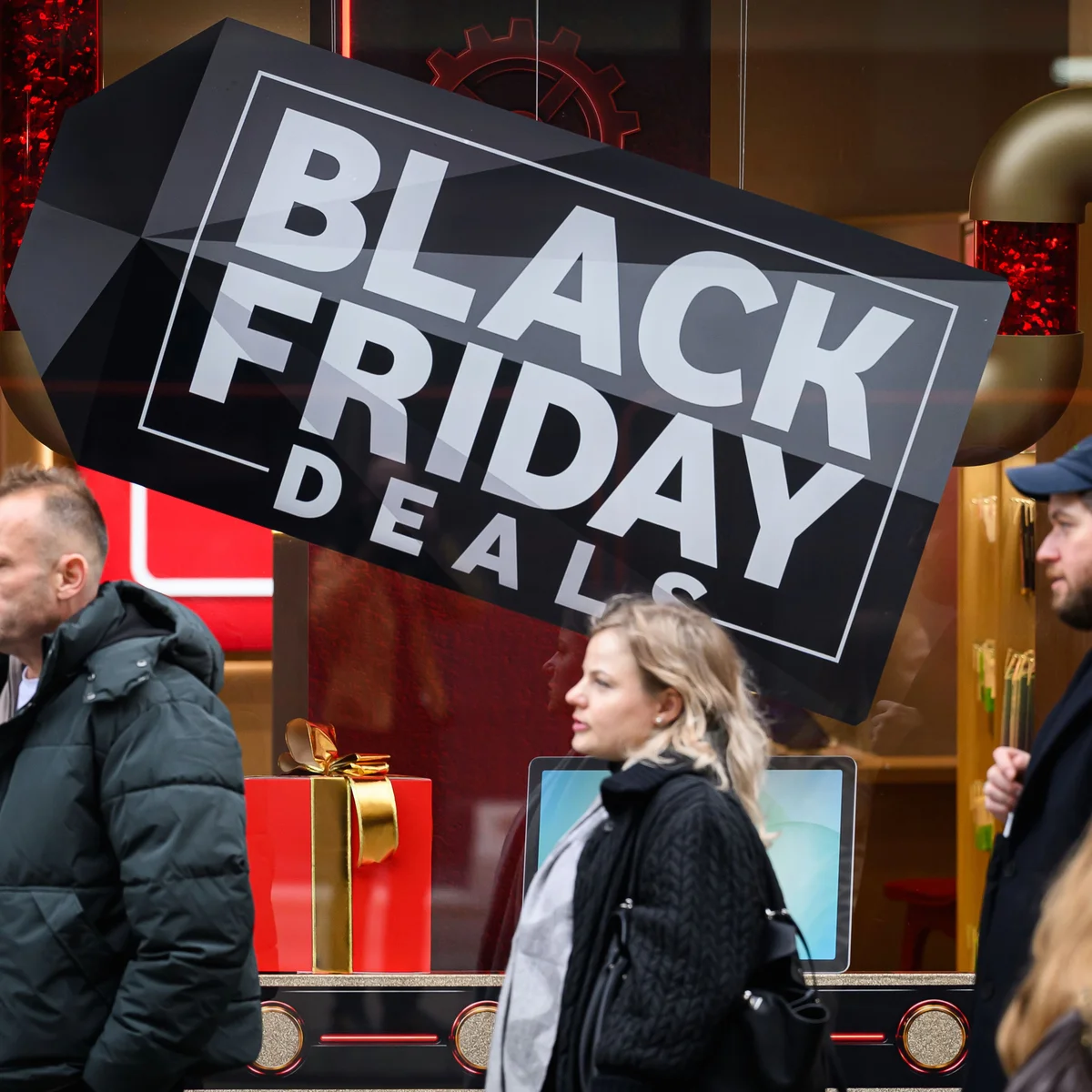
Americans Spend Billions on Black Friday as Online Shopping Heads Towards a New Record.
American consumers have demonstrated strong appetite for Black Friday bargains, with online spending expected to exceed $13 billion during the major shopping event.
Fresh figures from Adobe Analytics show that US online shoppers had already spent approximately $9.7 billion by 6:30 p.m. Eastern Time on Friday, November 27.
That represented a 12.8% increase compared with the corresponding period during the previous year’s Black Friday shopping event.
The figures suggest that consumers remain willing to spend on discounted products despite continuing concerns about inflation and higher living costs.
What Is Driving Black Friday Spending?
Black Friday has become one of the biggest annual shopping events in the United States.
Retailers use the occasion to offer discounts across several product categories, including:
- Smartphones and electronics.
- Televisions and computers.
- Clothing and footwear.
- Home appliances.
- Furniture and household products.
- Toys and gaming equipment.
Online shopping has also made it easier for consumers to compare prices and access promotions without visiting physical stores.
How Much Are Americans Expected to Spend?

Adobe Analytics projected that total US online Black Friday spending would reach between $13 billion and $13.4 billion.
The company also forecast approximately $15.1 billion in online spending for Cyber Monday, which falls on November 30.
Across the five-day period from Thanksgiving through Cyber Monday, online spending is projected to reach $47.5 billion.
These are projections rather than final audited sales totals.
What the Numbers Mean for Retailers
The strong shopping activity provides an important indication of consumer demand during the American holiday shopping season.
Retailers will be watching closely to determine whether the spending momentum continues into December.
The results will also provide additional information about how American households are balancing holiday purchases with everyday financial pressures.
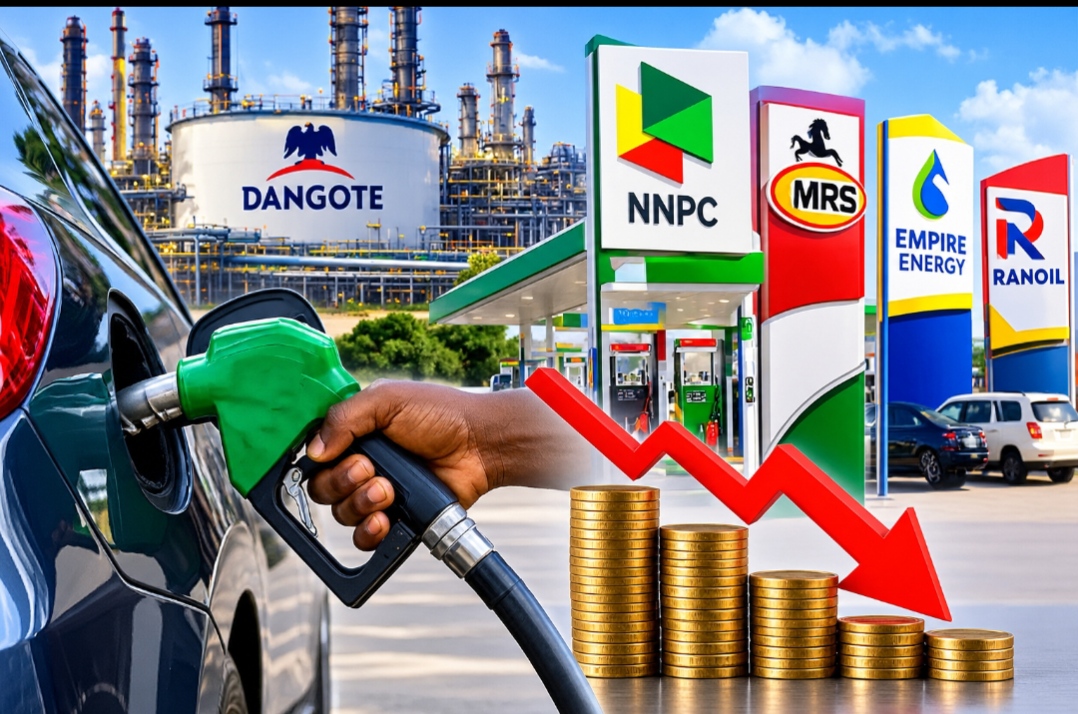
Petrol prices in Nigeria have dropped further across several filling stations in Abuja, with the Nigerian National Petroleum Company Limited (NNPCL), MRS and other fuel marketers adjusting their pump prices downward.
A market survey conducted by DAILY POST on Thursday revealed that NNPCL had reduced its petrol price from N1,325 to N1,300 per litre, representing a decrease of N25.
The new rate is already being implemented at some of the company’s outlets along Kubwa Expressway and in Zones 4 and 6 of Abuja.
MRS filling stations have also adjusted their prices, reducing the cost of petrol by N34 from N1,399 to N1,365 per litre across the Federal Capital Territory.
Similarly, Empire Energy and Ranoil have lowered their pump prices from N1,420 to N1,385 per litre.
With the latest adjustments, motorists in Abuja can now purchase petrol at prices ranging from N1,300 to N1,385 per litre, depending on the filling station.
SteadyGist reports that the latest reductions come days after the Dangote Refinery announced a cut in its petrol gantry price to N1,159 per litre. Meanwhile, imported petrol was reportedly selling at approximately N1,063 per litre.
The development comes amid fluctuations in the international crude oil market. At the time of filing this report, Brent crude was trading at $84 per barrel, while West Texas Intermediate (WTI) stood at $93 per barrel.
Recall that on November 4, 2026, NNPCL reduced its petrol pump price to N1,325 per litre from the previous range of N1,370 to N1,405.
The latest adjustment represents another round of price reductions in Nigeria’s downstream petroleum market following changes in Dangote Refinery’s gantry pricing.

BUA Group Chairman Abdul Samad Rabiu has revealed how changes in government regulations and sugar import policies forced his company to abandon plans to establish a second sugar refinery in Port Harcourt, Rivers State.
The billionaire businessman alleged that the policy changes followed representations made to the government by a major industry competitor, whom he identified as Dangote.
According to Rabiu, BUA had already made considerable progress on the Port Harcourt project before the government introduced new rules restricting companies from operating more than one sugar refinery.
He explained that the revised policy required sugar refinery operators to establish their own plantations under the government’s Backward Integration Programme (BIP). Although he acknowledged the importance of local sugar production, he said the restriction on multiple refineries created difficulties for BUA.
How Government Policy Affected BUA’s Port Harcourt Project
Recounting the events, Rabiu said his company was already about halfway through the construction of the proposed refinery when the new regulations were introduced.
He alleged that his competitor had approached the government with proposals that eventually changed the operating conditions for sugar manufacturers.
In his account, the policy required companies planning to establish sugar refineries in Nigeria to demonstrate commitment to backward integration by developing sugar plantations.
Rabiu said the requirement itself was not necessarily problematic. However, the additional restriction preventing a company from operating more than one refinery became a major obstacle.
He recalled that the Minister of Trade informed BUA that it could not proceed with the Port Harcourt facility because the company already operated a sugar refinery in Lagos.
The businessman said:
“Halfway completing the project, we were told by the Minister of Trade that we’re not allowed to operate, because only one company can have one refinery, therefore, if you already have one in Lagos, you can’t have another sugar refinery in Port Harcourt.”
Rabiu Alleges Unequal Sugar Import Allocations
Rabiu also discussed another government policy that affected the company’s operations: the introduction of an allocation system for importing raw sugar.
Under the arrangement, sugar producers were required to obtain government approval and receive import allocations specifying how much raw sugar they could bring into Nigeria for processing.
He claimed that the allocation system gave his competitor a significantly larger share than BUA.
According to Rabiu, the initial distribution awarded 70 per cent of the allocation to the competitor, while BUA received 20 per cent. The remaining 10 per cent was reportedly reserved as a buffer against possible shortages.
He said the arrangement made it difficult for BUA to justify completing the Port Harcourt refinery, as the facility would depend on access to sufficient quantities of raw sugar to operate profitably.
Explaining why the company eventually dropped the project, Rabiu said:
“I had to abandon Port Harcourt because I saw clearly that there would not have been any way we could operate Port Harcourt without getting allocation from the government.”
AfCFTA Renewed BUA’s Interest in the Port Harcourt Refinery
Despite the setback, Rabiu said he later reconsidered the abandoned project after examining the business opportunities presented by the African Continental Free Trade Area (AfCFTA).

He pointed out that Nigeria has significant sugar-refining capacity compared with many other countries in sub-Saharan Africa, several of which continue to rely heavily on imported refined sugar.
According to him, this creates an opportunity for Nigerian manufacturers to process raw sugar locally and supply finished products to other African markets.
Rabiu said the idea of establishing a destination refinery became particularly attractive under the AfCFTA framework.
A destination refinery is a facility that imports raw sugar and processes it into refined products closer to the markets where the sugar will eventually be consumed. The model is used in countries including India, Egypt and the United Arab Emirates.
With the African trade agreement offering opportunities for wider regional market access, Rabiu said he began looking at the Port Harcourt project from a different business perspective.
Rather than serving only Nigerian consumers, the proposed facility could potentially become a supply centre for other African countries.
Competition in Nigeria’s Sugar Industry
Nigeria’s sugar industry has witnessed significant competition among major industrial groups, particularly as companies invest in refining capacity, sugar plantations and backward integration initiatives.
The Federal Government’s Backward Integration Programme was designed to encourage local production of sugarcane and reduce the country’s dependence on imported raw sugar.
However, Rabiu’s account highlights the concerns that can arise when government policies change while major industrial investments are already underway.
His allegations also raise questions about competition, access to imported raw materials and the regulatory environment facing businesses in Nigeria.
For BUA, the decision to abandon the Port Harcourt refinery was presented as a business response to the restrictions and supply uncertainties it faced at the time.
The company’s renewed interest in the project under AfCFTA suggests that regional trade opportunities could influence the future direction of Nigeria’s sugar industry.
Watch the video: Rabiu recounts how government policies affected BUA’s original Port Harcourt sugar refinery plans.

Petrol Price reduction possible and this is because the cost of importing petrol into Nigeria has fallen to ₦1,164.06 per litre, raising expectations that pump prices could come down if the decline in international oil prices continues.
Figures published by the Major Energies Marketers Association of Nigeria (MEMAN) showed that petrol import parity dropped from ₦1,189.86 per litre on November 4 to ₦1,164.06 on November 5, 2026.
The latest figures represent a reduction of ₦25.80 per litre, equivalent to a 2.17 per cent decline within one day.
The development could put pressure on fuel retailers and local refiners to review their prices, particularly as competition in Nigeria’s downstream petroleum market continues.
Imported Petrol Now Cheaper Than Dangote Refinery’s Gantry Price
MEMAN’s energy price bulletin also showed a difference between the cost of imported petrol and the price at which Dangote Refinery was selling the product at its gantry.
As of the reported period, Dangote Refinery’s gantry price stood at ₦1,215 per litre, which was ₦50.94 higher than the import parity price of ₦1,164.06.
Import parity represents the estimated cost of bringing a product into the country, taking relevant international market and import-related costs into account. It is not necessarily the same as the final price motorists pay at filling stations.
The difference may influence pricing decisions among fuel importers, marketers and local refiners as they compete for customers.
Falling Crude Oil Prices Could Affect Petrol Costs
The drop in petrol import parity comes amid a decline in international crude oil prices.
According to the figures provided in the report, Brent crude fell by 2.31 per cent to $90.43 per barrel, while West Texas Intermediate (WTI) declined by 1.93 per cent to $85.17 per barrel.
The movement was linked to easing tensions surrounding the Iran conflict, which had previously contributed to uncertainty in global oil markets.
Since petrol prices are influenced by international energy costs, a sustained fall in crude oil prices could create room for lower import costs and potentially cheaper fuel in Nigeria.
However, the effect on local pump prices will also depend on other factors, including exchange rates, shipping expenses, distribution costs and marketers’ pricing decisions.
How Much Are Filling Stations Selling Petrol in Nigeria?
Despite the decline in import parity, petrol prices at filling stations remain relatively high.
According to the figures cited in the report, Nigerian National Petroleum Company Limited (NNPCL) outlets were selling petrol at approximately ₦1,325 per litre.
Other filling stations were reportedly charging between ₦1,395 and ₦1,420 per litre.
This means motorists are still paying considerably more than the latest import parity figure, although import parity and retail pump prices are not directly comparable.
Will Petrol Prices Drop Again in Nigeria?
The latest reduction in import costs has raised hopes of cheaper petrol, but it does not automatically mean filling stations will immediately lower their prices.
Any significant reduction will depend on whether the decline in international crude oil prices continues and how quickly those changes are reflected in the domestic supply chain.
Competition between fuel importers and local refiners could also influence future pricing decisions.
For now, motorists will be watching developments in the global oil market and announcements from major fuel marketers to see whether the lower import cost eventually translates into cheaper petrol at the pump.


Thanksgiving Storm Leaves Thousands Without Electricity Across America

Al Nassr Make Football History as First Club to Score in 100 Consecutive League Matches

Black Friday Online Spending Heads Above $13 Billion
-
Donald Trump6 years ago
Twitter, Facebook block Trump over Capitol attack posts
-
Politics9 years ago
Presidency reacts to Wole Soyinka’s comments about Buhari Being in a ‘Trance’
-
Gov. Ambode11 years ago
Lagos commences prosecution of 28 tax defaulters
-
Fashion9 years ago
These ’90s fashion trends are making a comeback in 2017
-
Entertainment9 years ago
The final 6 ‘Game of Thrones’ episodes might feel like a full season
-

 Entertainment3 years ago
Portable boasts of owning 30 Mansion Across Lagos and Ogun State
-
Fashion9 years ago
According to Dior Couture, this taboo fashion accessory is back
-
 Mohbad3 years ago
DNA Test Demanded for Mohbad’s Son Before Singer’s Burial